
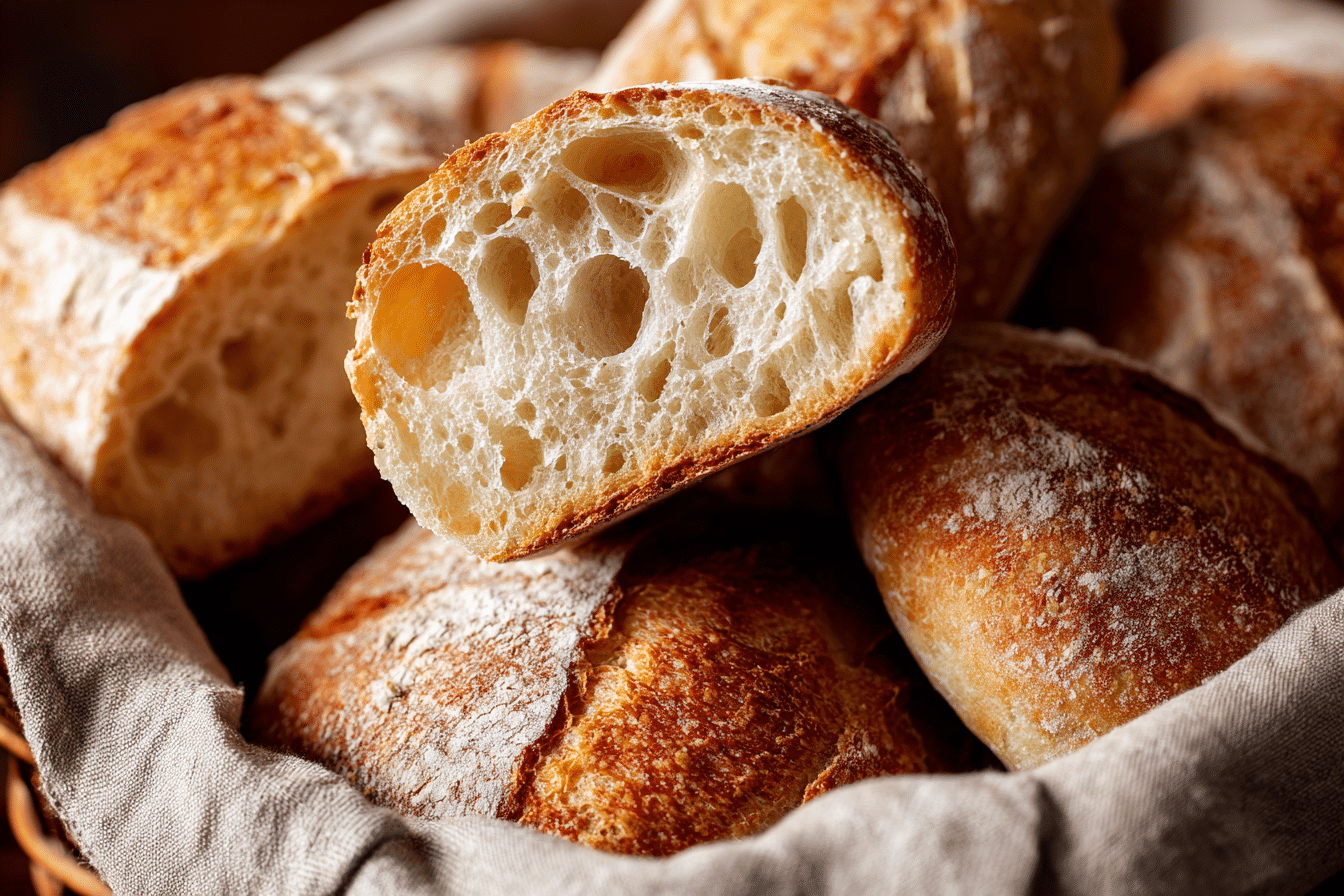
Ciabatta, meaning “slipper” in Italian, is a rustic bread known for its crisp crust and open, airy crumb. First developed in Italy in the 1980s as a response to French baguettes, it quickly became a favorite around the world for paninis, sandwiches, and dipping into olive oil.
This no-knead ciabatta recipe delivers everything you love about traditional ciabatta — that signature irregular hole structure and delicate chew — without the need for a mixer or intense kneading. The secret lies in a high-hydration dough and long fermentation time, allowing gluten to develop naturally while you rest.
The result? A light, airy interior wrapped in a golden, crackly crust. It’s a bakery-style loaf you can confidently make in your own kitchen.
Ingredients Overview
Each component in this dough plays a critical role in structure, flavor, and texture. Let’s break it down:
-
All-Purpose Flour: Regular flour works beautifully here. It provides just enough gluten for structure without being too chewy. You can also use bread flour for slightly more chew.
-
Water (Room Temperature): The high water content (around 80–85% hydration) is essential to creating the ciabatta’s trademark holes. Use filtered water if possible for clean flavor.
-
Instant Yeast: A small amount is all that’s needed, thanks to the long fermentation. You can also substitute with active dry yeast — just dissolve it in water first.
-
Salt: Enhances the flavor and strengthens the gluten. Use fine sea salt for even distribution.
-
Olive Oil (optional): A tablespoon of olive oil adds subtle richness and makes handling the sticky dough a bit easier. It’s optional, but traditional in some ciabatta styles.
Optional Ingredients & Alternatives
-
Whole Wheat Flour: Swap up to 25% for a slightly nuttier flavor and darker crumb.
-
Poolish or Biga Starter: For deeper flavor, make a preferment the night before using equal parts flour and water with a pinch of yeast.
-
Flour for Dusting: Use rice flour or semolina for dusting the surface to avoid sticking and give extra crust texture.
Step-by-Step Instructions
Creating no-knead ciabatta is a process of patience, not effort. Each step builds texture and flavor naturally.
1. Mix the Dough
-
In a large bowl, combine:
-
4 cups (500g) all-purpose flour
-
1½ tsp (9g) salt
-
¼ tsp (1g) instant yeast
-
1¾ cups (420g) water
-
-
Mix with a spatula until no dry flour remains. The dough will be very sticky — that’s perfect.
-
Optional: Add 1 tbsp olive oil and mix briefly.
2. First Rise – Bulk Fermentation
-
Cover the bowl with plastic wrap or a damp towel.
-
Let rest at room temperature for 12–18 hours.
-
The dough should double in size and show visible bubbles on the surface.
3. Stretch and Fold (Optional but Helpful)
-
For a stronger structure, gently lift and fold the dough over itself 2–3 times during the first few hours of rising (every 30–60 minutes).
-
This improves gluten development and adds lift.
4. Shape the Dough
-
Generously flour a work surface. Scrape the dough out gently — don’t punch it down.
-
Dust the top with flour and divide in half for two loaves.
-
With floured hands or a bench scraper, carefully lift each piece and stretch slightly into a rectangle (about 10×5 inches). Handle minimally to preserve the air bubbles.
-
Transfer to a parchment-lined baking sheet or a floured couche. Let rise uncovered or lightly covered with a towel for 45–60 minutes.
5. Bake
-
Preheat oven to 475°F (245°C). Place a baking stone or heavy sheet pan inside. Optional: Place a metal tray at the bottom for steam.
-
When ready to bake, slide the parchment with loaves onto the hot surface. Add 1 cup hot water to the steam tray and quickly close the oven.
-
Bake for 20–25 minutes, until deep golden brown and crusty.
6. Cool
-
Let the ciabatta cool fully on a wire rack before slicing. The crumb finishes setting as it cools.
Tips, Variations & Substitutions
-
Hydration is Key: Ciabatta dough is wetter than most. Resist the urge to add flour — the stickiness leads to that open, airy crumb.
-
No Dutch Oven Needed: Unlike many artisan breads, ciabatta does best directly on a stone or sheet with steam added separately.
-
For Rolls (Ciabattini): Divide dough into 6–8 smaller rectangles for individual sandwich rolls. Bake for 15–18 minutes.
-
Flavor Boosters: Add chopped olives, sun-dried tomatoes, or rosemary for a Mediterranean twist.
-
Use a Biga for Authentic Flavor: Mix 100g flour + 100g water + pinch of yeast the night before, then add to final dough for more complex sourdough-like notes.
Serving Ideas & Occasions
Ciabatta is incredibly versatile, making it perfect for any meal or gathering. Here are some pairing and serving ideas:
-
Sandwiches & Paninis: Its light texture and crust hold up to hearty fillings like grilled vegetables, prosciutto, or fresh mozzarella.
-
Dipping Bread: Serve warm with olive oil, balsamic vinegar, or herbed butter.
-
Bruschetta Base: Toasted ciabatta slices make the perfect base for tomatoes, garlic, or ricotta.
-
Soup Companion: Pair with tomato soup, lentil stew, or creamy chowder — the crust is ideal for dunking.
-
Breakfast Toast: Try it with avocado, poached eggs, or whipped honey butter.
-
Holiday & Party Bread Basket: Adds rustic charm to any spread or appetizer board.
Nutritional & Health Notes
While ciabatta isn’t low in carbs, it’s a clean, additive-free bread that fits into many whole-food diets when enjoyed in moderation.
-
Low-Fat and Simple: With no sugar and minimal oil, ciabatta is a simple, clean bread option.
-
Digestibility: Long fermentation makes it easier on the stomach and may improve gluten tolerance for some.
-
Customizable Nutrition: Add seeds (like flax or sesame) or swap in whole wheat flour to increase fiber and nutrient content.
-
Portion Control: One loaf yields about 10 slices. Consider slicing and freezing extras for easy toast or sandwiches later.
FAQs
Q1: Why is my ciabatta dough so wet and sticky?
A1: This high-hydration dough is meant to be sticky — that’s how you get the open crumb. Don’t add extra flour. Use wet or floured hands and tools to handle it instead.
Q2: Can I use active dry yeast instead of instant?
A2: Yes, but dissolve it in the water first and let sit for 5–10 minutes before mixing into the dough.
Q3: What if I don’t have a baking stone?
A3: Use an inverted heavy baking sheet preheated in the oven. It helps simulate the heat of a stone and gives a better crust.
Q4: Can I shorten the rise time?
A4: A shorter rise at warm temperature (about 4–6 hours) is possible with more yeast (½ tsp), but flavor and texture improve with longer fermentation.
Q5: How do I store ciabatta?
A5: Store at room temperature in a paper bag for up to 2 days. For longer storage, freeze whole or sliced in airtight bags. Reheat in the oven to revive the crust.
Q6: Can I make it gluten-free?
A6: It’s difficult to replicate ciabatta’s airy crumb without gluten. A high-hydration gluten-free flour blend may work, but the result will be different in texture.
Q7: Why is my crust too soft?
A7: Avoid covering the bread while it cools — the trapped steam softens the crust. Let it cool uncovered on a wire rack for the crispest texture.
PrintSimple No-Knead Ciabatta for Family Meals and Lunches
A simple, no-knead ciabatta recipe with a crisp crust and open, airy crumb. Perfect for sandwiches, dipping, or serving with soups and spreads.
- Prep Time: 10 minutes (active)
- Cook Time: 25 minutes
- Total Time: 13–18 hours (with rise)
- Yield: 2 medium loaves 1x
Ingredients
-
4 cups (500g) all-purpose flour
-
1¾ cups (420g) water, room temp
-
¼ tsp instant yeast
-
1½ tsp salt
-
1 tbsp olive oil (optional)
Instructions
-
In a large bowl, mix flour, yeast, salt, and water until no dry spots remain. Add olive oil if using.
-
Cover and let rise at room temperature for 12–18 hours.
-
(Optional) Perform 2–3 stretch-and-folds during the first 3 hours.
-
Scrape dough onto a floured surface. Gently divide into 2 loaves and shape into rectangles.
-
Let rise 45–60 minutes. Preheat oven to 475°F with a stone or sheet inside.
-
Slide dough (on parchment) onto hot surface. Add steam (optional).
-
Bake for 20–25 minutes until golden and crisp. Cool on a wire rack.
Notes
-
For best results, use a baking stone and create steam in the oven.
-
Do not over-handle the dough — minimal shaping preserves air pockets.
-
Substitute up to 25% whole wheat flour for added flavor.