
Adorable bento cakes have taken over social media and bakery windows, and it’s easy to see why. These charming, palm-sized cakes originated in South Korea, where minimal design and small portions are prized for personal celebrations. Traditionally packaged in compact takeout-style boxes, bento cakes are meant for one or two people, making them perfect for birthdays, anniversaries, or thoughtful gifts.
What sets bento cakes apart is their playful simplicity. Soft sponge layers, lightly sweetened frosting, and hand-drawn messages or cute illustrations give each cake personality without feeling overdone. Unlike large celebration cakes, bento cakes invite creativity without pressure. A single color palette, a short phrase, or a tiny heart can say everything.
Learning how to make adorable bento cakes at home is surprisingly approachable. With basic baking tools and a bit of patience, you can recreate the look and texture seen in popular Korean bakeries while tailoring flavors and designs to your taste.
Ingredients Overview
Bento cakes rely on familiar cake ingredients, but balance matters more because of their size. Each component plays a clear role in flavor and texture.
Cake base:
A light vanilla sponge is most common. Cake flour gives a tender crumb, while all-purpose flour also works if sifted well. Eggs provide structure, sugar adds sweetness and moisture, and neutral oil or softened butter keeps the cake soft even after chilling.
Liquid:
Milk or buttermilk adds richness and helps dissolve sugar evenly. Some bakers prefer milk with a splash of cream for a fuller mouthfeel.
Leavening:
Baking powder creates lift without the stronger flavor that baking soda can bring. Precision is key here since the layers are thin.
Frosting:
Lightly sweetened whipped cream frosting is traditional in Korean-style bento cakes. It feels airy and clean compared to heavy buttercream. For warmer climates, stabilized whipped cream or a cream cheese–based frosting offers better structure.
Flavor additions:
Vanilla extract is standard, but matcha powder, cocoa, or espresso powder can be added for subtle variation. Fruit purées work well between layers.
Decorating tools:
Gel food coloring, small offset spatulas, and piping bags with fine tips help create neat designs without excess frosting.
Ingredient quality matters more than quantity with bento cakes. Fresh eggs, real vanilla, and cream with high fat content give noticeably better results.
Step-by-Step Instructions
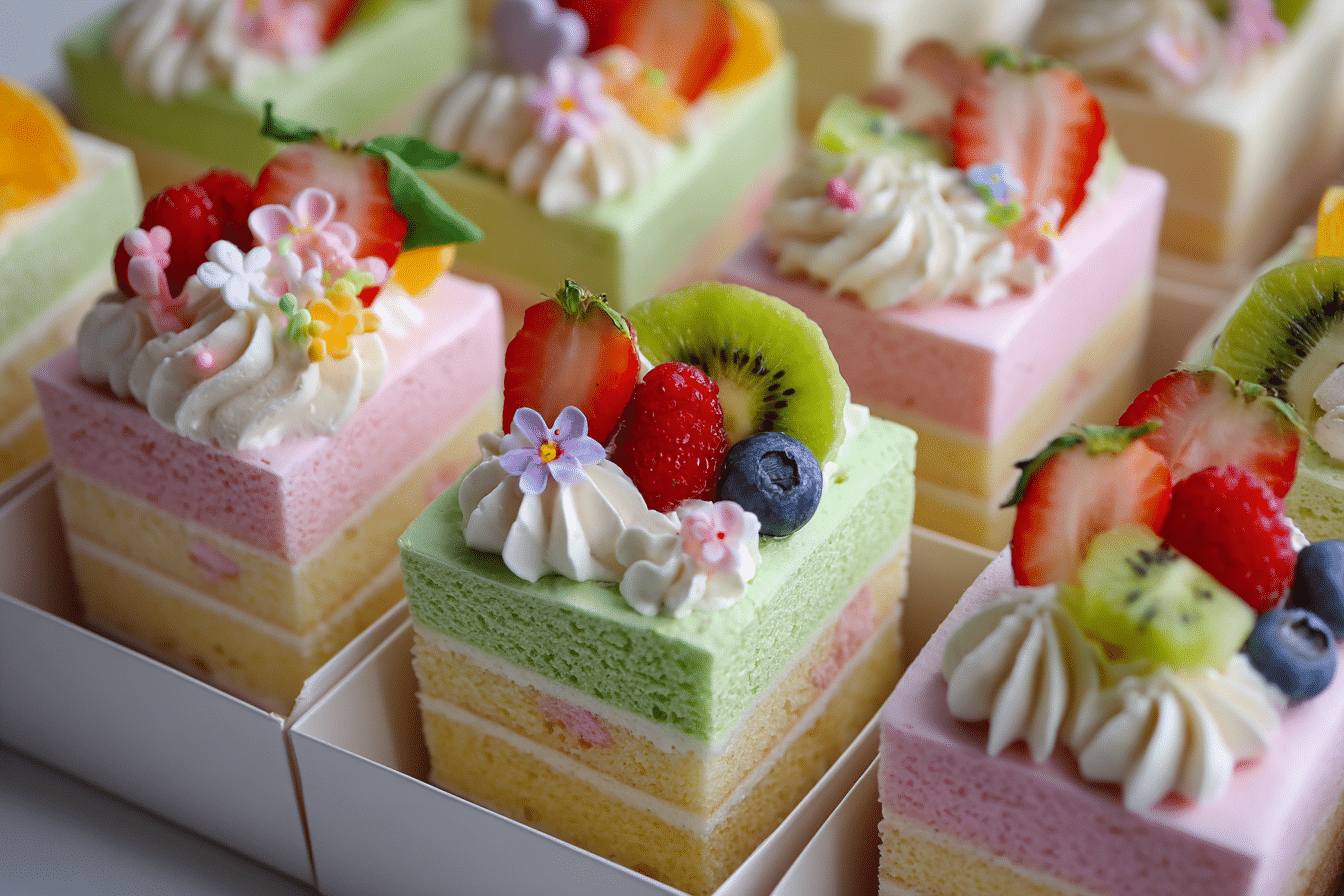
Begin by preparing the sponge cake. Preheat the oven to 170°C (340°F) and line a shallow sheet pan with parchment paper. Bento cakes are often cut from a thin sheet cake rather than baked in tiny pans, which keeps layers even.
Whisk eggs and sugar until pale and slightly thickened. This step helps trap air, contributing to a soft crumb. Slowly stream in oil or melted butter, followed by milk and vanilla, mixing gently to avoid deflating the batter.
Sift flour and baking powder together, then fold them in using a spatula. Stop mixing as soon as no dry streaks remain. Overmixing leads to a dense cake, which is especially noticeable in small portions.
Spread the batter evenly in the pan and tap lightly to release air bubbles. Bake for 12–15 minutes, just until the surface springs back when touched. Cool completely before cutting.
Use a round cutter or small bowl to cut two or three layers per cake, usually 10–12 cm wide. Trim gently for clean edges.
For the frosting, whip cold cream with powdered sugar until soft peaks form. If using cream cheese, beat it smooth first, then fold into the whipped cream.
Assemble by placing one cake layer on a small board, spreading a thin layer of frosting, and adding any filling. Stack carefully, keeping edges aligned. Apply a thin crumb coat and chill for 15 minutes.
Finish with a smooth outer layer. Use a spatula dipped in warm water for clean sides. Decorate with simple piping, text, or line drawings. Less detail often looks more intentional with bento cakes.
Tips, Variations, and Substitutions
Keep designs minimal. Short messages, tiny flowers, or single icons suit the scale better than complex patterns.
Chill the cake briefly before decorating to keep frosting neat. A cold surface prevents smudging.
For chocolate bento cakes, replace 15% of the flour with cocoa powder and add a tablespoon of extra milk.
Dairy-free versions work well with coconut cream frosting and plant-based milk. The cake stays tender when oil is used instead of butter.
Gluten-free sponge can be made with a one-to-one gluten-free flour blend, though the crumb may be slightly more delicate.
Fruit-forward versions with strawberry or mango filling pair well with lightly sweetened cream, keeping flavors balanced rather than heavy.
Serving Ideas & Occasions
Bento cakes shine during small, meaningful moments. They suit birthdays for one, study milestones, or quiet celebrations at home. Their compact size makes them ideal for gifting without leftovers.
Serve chilled with tea, iced coffee, or milk-based drinks. The light frosting pairs especially well with matcha lattes or simple black tea.
For parties, arrange several bento cakes with different designs instead of one large cake. Guests can choose their own, and the table looks playful yet tidy.
Because they travel well in small boxes, bento cakes are also popular for picnics or surprise deliveries, staying intact with minimal effort.
Nutritional & Health Notes
Bento cakes offer built-in portion control. Their smaller size naturally limits excess sugar and calories compared to standard celebration cakes.
Using whipped cream instead of heavy buttercream reduces overall fat while keeping a creamy texture. Sponge cakes made with oil tend to stay moist without large amounts of frosting.
Adding fruit layers boosts freshness and reduces the need for extra sugar. For those watching intake, a single bento cake can comfortably be shared.
While still a treat, bento cakes fit more easily into balanced eating habits when enjoyed occasionally and mindfully.
FAQs
Q1: What size should a bento cake be?
Most bento cakes measure 10–12 cm in diameter and are about 5–7 cm tall. This size suits one or two servings and fits standard bento boxes.
Q2: Can bento cakes be frozen?
Unfrosted sponge layers freeze well for up to one month. Fully decorated cakes are best enjoyed fresh, as whipped cream texture changes after freezing.
Q3: Why is whipped cream used instead of buttercream?
Korean-style bento cakes focus on light texture and mild sweetness. Whipped cream complements this style better than dense frosting.
Q4: How long do bento cakes last in the fridge?
They keep well for up to 48 hours when stored in an airtight container. Freshness is best within the first day.
Q5: Can I bake bento cakes in small pans?
Yes, but sheet-pan baking offers more even layers. Small pans can bake unevenly due to shallow depth.
Q6: What tools are helpful for clean designs?
Small offset spatulas, parchment paper squares, and fine piping tips give better control on tiny surfaces.
Q7: Are bento cakes suitable for beginners?
Yes. Their size makes them forgiving, and simple designs reduce pressure compared to large cakes.
Adorable Bento Cakes: Easy Mini Cake Ideas Anyone Can Make
Soft, lightly sweetened mini cakes inspired by Korean-style bento cakes, perfect for small celebrations and gifting.
- Prep Time: 25 minutes
- Cook Time: 15 minutes
- Total Time: 40 minutes
- Yield: 2–3 bento cakes 1x
Ingredients
2 large eggs
60 g granulated sugar
40 ml neutral oil
40 ml milk
1 tsp vanilla extract
80 g cake flour
1 tsp baking powder
200 ml heavy cream
20 g powdered sugar
Instructions
-
Preheat oven to 170°C (340°F) and line a shallow pan.
-
Whisk eggs and sugar until pale. Add oil, milk, and vanilla.
-
Fold in sifted flour and baking powder.
-
Bake 12–15 minutes. Cool fully.
-
Cut small round layers.
-
Whip cream with powdered sugar to soft peaks.
-
Layer cake with cream, frost outside, and decorate.
Notes
Add fruit filling or cocoa powder for variation. Chill briefly before decorating for clean lines.