
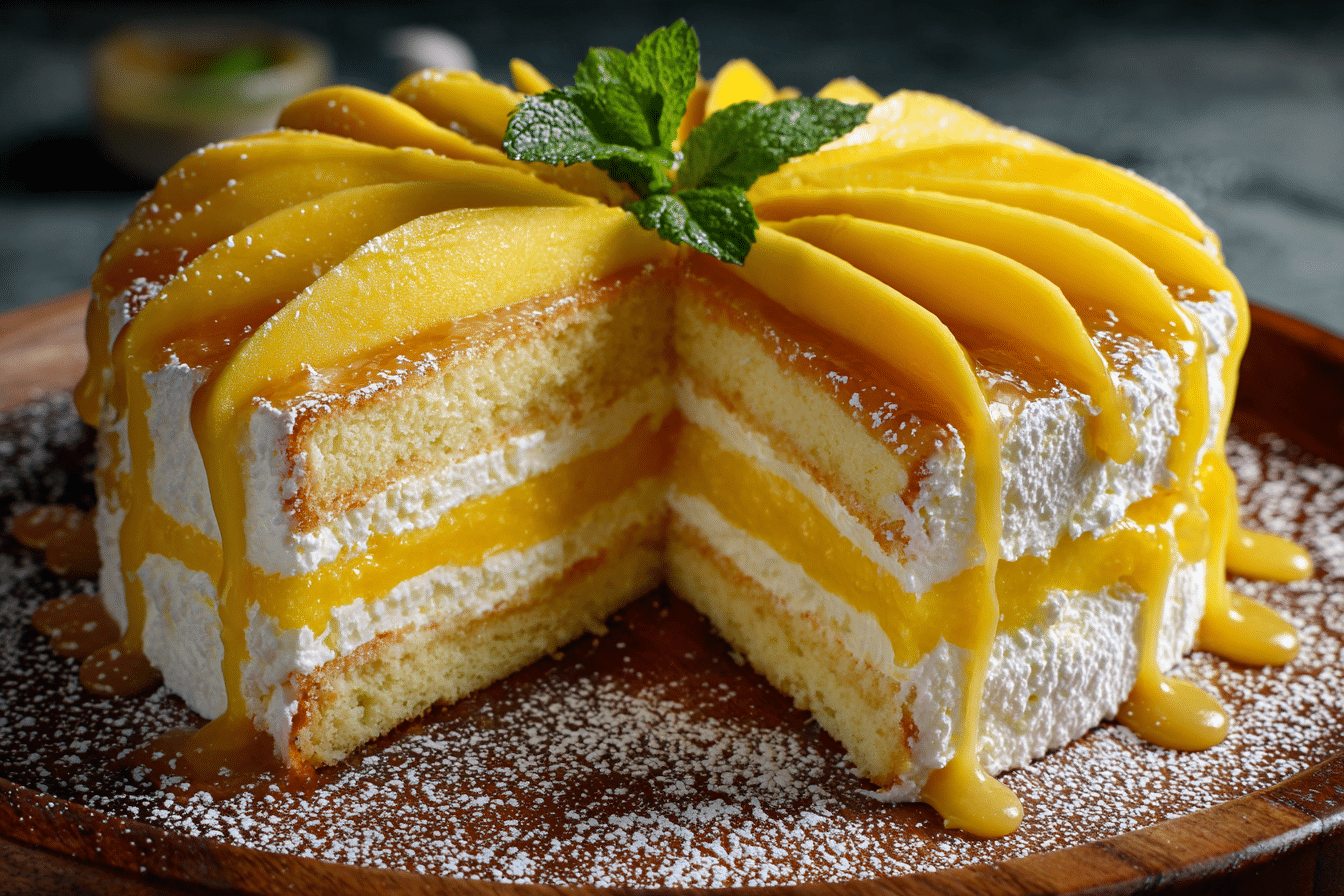
Mango Mousse Cake is the ultimate dessert for mango lovers—a light, dreamy combination of tropical fruit and airy mousse, layered over a soft sponge or biscuit base. With its vibrant golden hue and delicate texture, it’s a show-stopping treat that feels both indulgent and refreshing.
This dessert brings together the velvety richness of whipped cream and mango puree, creating a melt-in-your-mouth mousse that contrasts beautifully with a tender cake base. Often topped with a glossy mango glaze or fresh mango slices, every bite is smooth, fruity, and just sweet enough. Whether served at a celebration or enjoyed on a warm day, Mango Mousse Cake makes an elegant, crowd-pleasing finale.
The flavors are clean and bright, and despite its luxurious appearance, it’s surprisingly easy to prepare. Once chilled and set, it slices cleanly into stunning portions that look as good as they taste.
Ingredients Overview
Fresh Mango or Mango Puree
This is the soul of the dessert. Use ripe, sweet mangoes (like Ataulfo or Alphonso) or high-quality canned mango puree with no added sugar. The puree gives the mousse and glaze its natural color and tropical flavor.
Heavy Cream (Whipping Cream)
Adds the light, airy texture to the mousse. Whip it until soft or medium peaks form, so it folds smoothly into the mango mixture without deflating. Use full-fat cream for the best volume and stability.
Sugar
Used to sweeten the mousse and balance the tartness of the mango. You can adjust to taste depending on the sweetness of your fruit. Powdered sugar or granulated sugar both work.
Gelatin
This helps the mousse and glaze set properly. Use unflavored powdered gelatin or gelatin sheets. Bloom it in cold water before heating to activate. Agar-agar can be used as a vegetarian substitute, but the texture will be slightly firmer.
Sponge Cake or Biscuit Base
The bottom layer provides structure and contrast. A thin vanilla sponge cake is traditional, but you can also use a crushed biscuit base (like graham crackers or digestive biscuits) mixed with melted butter for a no-bake option.
Lemon Juice (Optional)
Brightens the mango flavor and adds a hint of acidity that keeps the mousse from being overly sweet.
Mango Glaze (Optional)
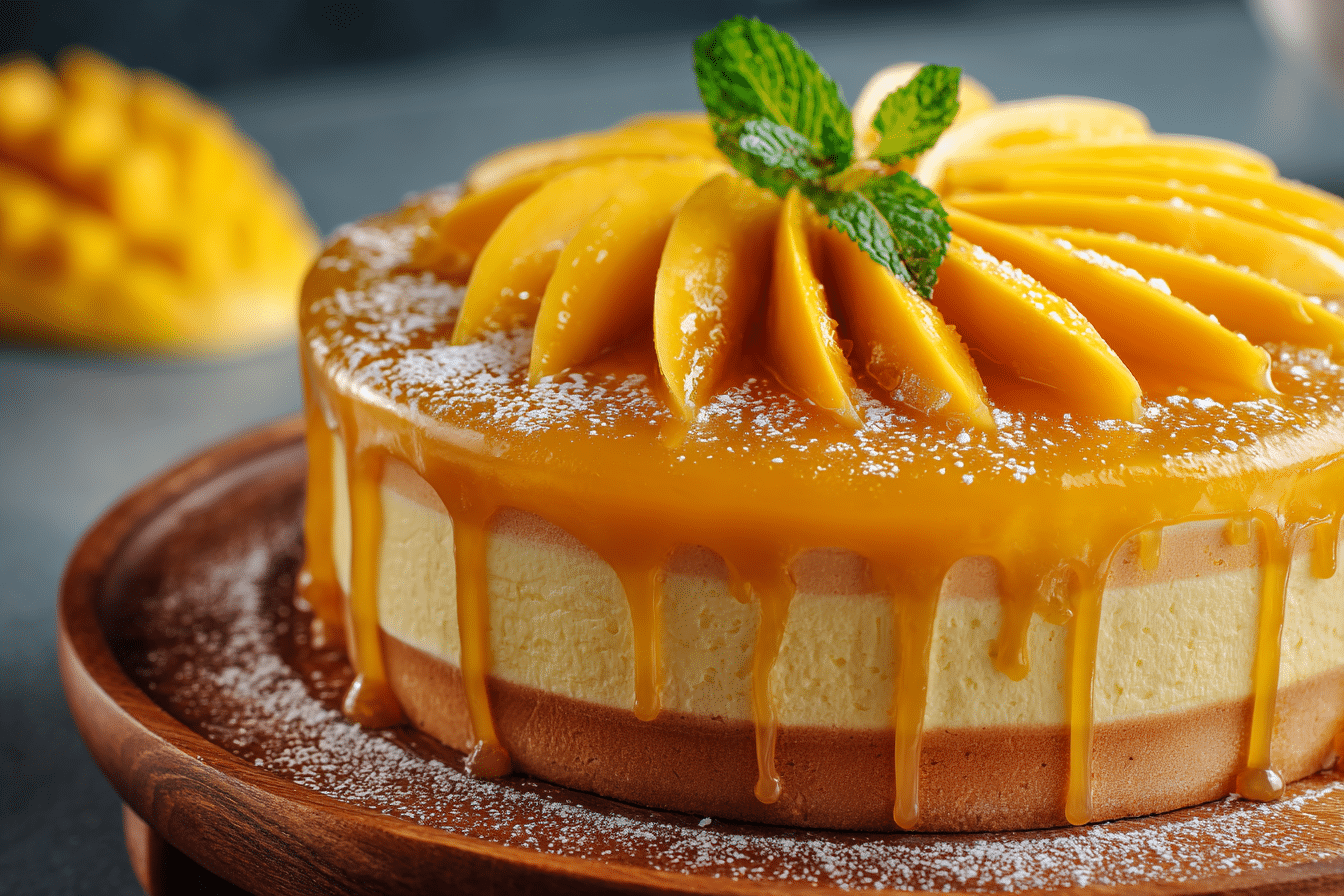
A glossy topping made with mango puree, sugar, and gelatin for a stunning finish. It enhances flavor and makes the cake visually appealing.
Step-by-Step Instructions
1. Prepare the Base
If using a sponge cake, bake a thin layer in a round cake pan (8 or 9 inches). Let it cool, then trim to fit the bottom of a springform pan. If using a biscuit base, mix 1½ cups crushed biscuits with ¼ cup melted butter and press into the bottom of the pan. Chill while you prepare the mousse.
2. Bloom the Gelatin
In a small bowl, sprinkle 2½ teaspoons (about 1 packet) of unflavored gelatin over 3 tablespoons of cold water. Let it sit for 5–10 minutes until it becomes spongy.
3. Make the Mango Mixture
In a saucepan over low heat, warm 1¼ cups mango puree with 2–3 tablespoons sugar (to taste) and 1 tablespoon lemon juice. Once warm, stir in the bloomed gelatin until fully dissolved. Remove from heat and let cool to room temperature.
4. Whip the Cream
In a large bowl, beat 1 cup of heavy cream until soft to medium peaks form. Keep it chilled until you’re ready to fold it in.
5. Combine Mango and Cream
Once the mango mixture has cooled, gently fold in the whipped cream in two parts using a spatula. Work slowly to preserve the airy texture.
6. Assemble the Cake
Pour the mango mousse mixture over your prepared base in the springform pan. Smooth the top and tap the pan lightly to remove air bubbles. Cover and refrigerate for at least 4 hours, or overnight, until set.
7. Prepare the Mango Glaze (Optional)
Bloom 1 teaspoon gelatin in 2 tablespoons cold water. Warm ½ cup mango puree with 1 tablespoon sugar, then stir in the gelatin until melted. Let it cool slightly, then pour over the chilled mousse layer. Tilt the pan gently to spread evenly.
8. Final Chill and Decorate
Refrigerate the cake for another hour after glazing. Once fully set, release the cake from the springform pan. Garnish with mango slices, mint leaves, or whipped cream before serving.
Tips, Variations & Substitutions
Tips
-
Use a clear acetate collar inside the springform pan for cleaner sides.
-
Chill the mixing bowl and whisk before whipping cream for better volume.
-
Let the mango mixture cool before folding in the cream to avoid melting it.
Variations
-
Add a coconut milk layer beneath the mango mousse for a tropical twist.
-
Incorporate diced mango into the mousse for a bit of texture.
-
Make individual servings in dessert glasses or jars for a modern presentation.
Substitutions
-
For a vegetarian version, replace gelatin with agar-agar (use 1½ tsp agar powder for every 1 tsp gelatin).
-
Replace mango with peach or passion fruit puree for a different flavor profile.
-
Use mascarpone or Greek yogurt in place of part of the whipped cream for a denser mousse.
Serving Ideas & Occasions
Mango Mousse Cake is a beautiful centerpiece for any summer celebration. It’s perfect for birthdays, bridal showers, tropical-themed parties, or simply as a weekend dessert when mangoes are in season.
Serve it chilled with a side of coconut whipped cream or fresh berries. Pair with a glass of chilled Moscato, mango iced tea, or sparkling lemonade for a complete tropical dessert experience.
You can also present it as mini cakes for elegant plated desserts or make it a layered trifle in a clear bowl for a stunning table display.
Nutritional & Health Notes
This cake is naturally fruit-forward, making it a lighter option compared to butter-heavy desserts. Mangoes provide vitamin C and beta-carotene, and using fresh fruit puree means no artificial flavors or colors are needed.
To lighten it further, reduce the sugar slightly or swap part of the cream for yogurt. You can also opt for a nut-based crust instead of traditional sponge or biscuits for a gluten-free alternative.
Despite the use of cream and gelatin, this dessert feels lighter on the palate—ideal for warm weather or after a rich meal.
FAQs
1. Can I make Mango Mousse Cake ahead of time?
Yes, and it’s even better made a day in advance. The mousse needs at least 4 hours to set, so overnight chilling is perfect.
2. Can I use canned mango puree?
Absolutely. Use high-quality, unsweetened canned mango puree if fresh mangoes aren’t available. Adjust the sugar to taste since canned varieties can vary in sweetness.
3. Can I freeze Mango Mousse Cake?
Yes, you can freeze it for up to 2 weeks. Wrap it tightly in plastic and foil. Thaw overnight in the fridge before serving. The texture may be slightly softer but still delicious.
4. What if I don’t have a springform pan?
You can use a regular cake pan lined with parchment or acetate, but releasing the cake cleanly will be harder. Individual ramekins or jars are a great alternative.
5. How do I prevent the mousse from separating?
Make sure the mango mixture is cooled before folding in the whipped cream. Don’t overmix—fold gently to maintain structure and avoid deflation.
6. Is this cake gluten-free?
Only if you use a gluten-free base. The mousse itself is naturally gluten-free. Choose a gluten-free sponge or biscuit base if needed.
7. Can I make it without gelatin?
Yes, use agar-agar as a vegetarian alternative. The setting texture will be firmer. Follow the package instructions for correct hydration and activation.
Refreshing Mango Cake Perfect for Special Occasions

A tropical no-bake dessert featuring creamy mango mousse layered over a soft sponge or biscuit base, finished with a glossy mango glaze.
- Prep Time: 30 minutes
- Cook Time: 5 minutes
- Total Time: 4 hours 35 minutes (with chilling)
- Yield: 8–10 servings
Ingredients
For Base:
1 sponge cake layer or
1½ cups crushed biscuits + ¼ cup melted butter
For Mango Mousse:
1¼ cups mango puree
2½ tsp unflavored gelatin
3 tbsp cold water
2–3 tbsp sugar (to taste)
1 tbsp lemon juice (optional)
1 cup heavy cream
For Mango Glaze (Optional):
½ cup mango puree
1 tbsp sugar
1 tsp gelatin
2 tbsp cold water
Instructions
-
Prepare sponge or biscuit base in an 8–9″ springform pan. Chill.
-
Bloom gelatin in cold water for 5–10 minutes.
-
Heat mango puree with sugar and lemon juice. Stir in gelatin until dissolved. Let cool.
-
Whip cream to soft peaks and gently fold into cooled mango mixture.
-
Pour mousse over base and smooth top. Chill at least 4 hours.
-
For glaze, bloom gelatin, warm mango puree with sugar, dissolve gelatin, and cool.
-
Pour glaze over mousse. Chill 1 hour.
-
Unmold and decorate before serving.
Notes
Use ripe, sweet mangoes or high-quality canned puree. Chill thoroughly for clean slices.