
There’s something undeniably delightful about a mini dessert—especially when it’s as soft, light, and satisfying as these mini sponge cakes. These little golden gems are everything a sponge cake should be: airy, tender, and buttery, with just the right amount of sweetness. Whether served plain, dusted with powdered sugar, or filled with cream and fruit, they bring elegance to even the simplest occasion.
Mini sponge cakes are perfect for afternoon tea, lunchboxes, or a dessert table. Their small size makes them easy to serve and eat, while their texture—bouncy and feather-light—makes them hard to resist. With just a few simple ingredients and no special tools required, this recipe is a great starting point for home bakers or anyone looking for a versatile, classic treat.
You can dress them up or keep them simple, serve them fresh or freeze them for later. However you enjoy them, these mini sponge cakes are a true bakery-style pleasure made easily at home.
Ingredients Overview
The beauty of sponge cakes is in their simplicity. Just a few ingredients come together to create a light, fluffy, and flavorful cake. Here’s what you’ll need:
All-Purpose Flour or Cake Flour:
Cake flour gives the softest texture, but all-purpose flour works well too. Be sure to sift it to keep the batter light and lump-free.
Granulated Sugar:
Sweetens the cakes and helps with the structure. Fine granulated sugar dissolves more easily and incorporates more smoothly.
Eggs:
The most essential ingredient in sponge cakes. Eggs create volume, structure, and lightness. They’re typically whipped to incorporate air, which helps the cake rise without leavening agents.
Unsalted Butter (Melted):
Adds a rich flavor and slightly denser crumb. It’s folded in carefully at the end to maintain airiness.
Vanilla Extract:
Enhances the flavor of the cake. You can also use lemon or almond extract for variation.
Salt:
Just a pinch helps balance the sweetness and intensify flavors.
Optional Ingredients:
-
Lemon zest for a bright, citrusy touch
-
Milk or water (1–2 tbsp) to slightly loosen the batter if needed
-
Baking powder (optional) if you want added lift, though traditional sponge cakes rely on eggs alone
Substitutions:
-
Gluten-free flour blends work at a 1:1 ratio for gluten-free mini sponge cakes.
-
Use plant-based butter for a dairy-free version, though the flavor will be slightly different.
-
Sugar substitutes that retain structure can be used but may change texture.
Step-by-Step Instructions
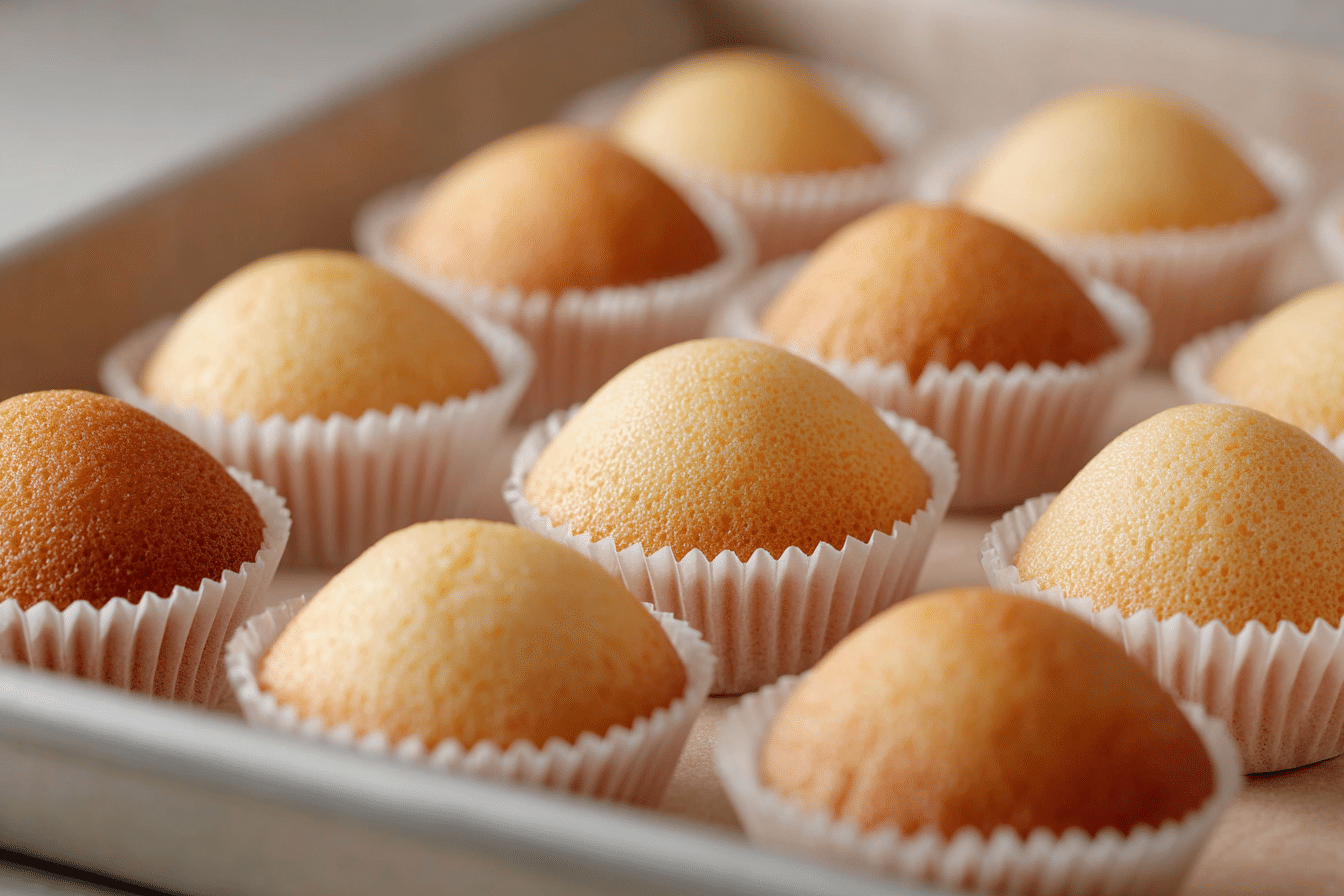
Step 1: Prep the Oven and Pan
Preheat your oven to 350°F (175°C). Grease and flour a mini cake pan, muffin tin, or silicone molds. If using paper liners, choose stiff ones that hold their shape.
Step 2: Separate the Eggs (Optional)
To achieve extra fluffy texture, separate the eggs. Beat the yolks and sugar first, then whip the whites to soft peaks and fold in later. This adds more lift.
Step 3: Beat Eggs and Sugar
In a large bowl, beat 3 large eggs and 1/2 cup granulated sugar together with a hand mixer or stand mixer for 5–7 minutes, until the mixture is pale, thick, and has tripled in volume. This step is key to incorporating air and achieving a sponge-like texture.
Step 4: Add Vanilla and Dry Ingredients
Gently mix in 1 teaspoon vanilla extract and a pinch of salt. Sift in 3/4 cup all-purpose or cake flour gradually, folding it in gently with a spatula. Be careful not to deflate the batter.
Step 5: Fold in Melted Butter
Drizzle in 2 tablespoons of melted (cooled) unsalted butter, folding gently just until incorporated. This adds richness without weighing down the cake.
Step 6: Fill the Molds
Spoon the batter into your prepared molds, filling them about 3/4 full. The batter will rise, so don’t overfill.
Step 7: Bake
Bake for 12–15 minutes, or until the tops are lightly golden and spring back when touched. A toothpick should come out clean from the center.
Step 8: Cool and Serve
Let the mini cakes cool in the pan for 5 minutes before transferring to a wire rack to cool completely. Dust with powdered sugar, glaze, or serve with jam, cream, or fresh fruit.
Common Mistakes to Avoid:
-
Don’t skip the long egg beating time—it’s essential for structure and lift.
-
Avoid overmixing after adding flour to keep the cakes light.
-
Be gentle when folding in butter to preserve the air bubbles in the batter.
Tips, Variations & Substitutions
Helpful Tips:
-
Use room-temperature eggs—they whip up with more volume.
-
A rubber spatula is best for folding to avoid deflating the batter.
-
Bake mini sponge cakes on the middle oven rack for even heat distribution.
Flavor Variations:
-
Lemon sponge cakes: Add 1 teaspoon lemon zest to the batter.
-
Almond version: Replace some flour with finely ground almonds and use almond extract.
-
Chocolate swirl: Fold in 1 tablespoon cocoa powder or a chocolate swirl before baking.
-
Coconut sponge: Add 2 tablespoons desiccated coconut for a tropical twist.
Decorating Ideas:
-
Drizzle with simple glaze or lemon icing
-
Sandwich two with jam and whipped cream for a mini Victoria sponge
-
Dip tops in melted chocolate and sprinkle with crushed nuts or coconut
-
Top with whipped cream and a raspberry for a tea party-ready presentation
Serving Ideas & Occasions
Mini sponge cakes are perfect for a variety of occasions:
-
Afternoon tea served with clotted cream and jam
-
Birthday parties as part of a dessert platter
-
Bridal or baby showers with delicate decorations
-
Holiday gatherings dressed up with seasonal toppings
-
Everyday treats with coffee or milk
They’re ideal for portion control and easy to transport. You can even stack them in a tower for a playful twist on a traditional cake. Add fruit compote or lemon curd on the side for extra flair.
Nutritional & Health Notes
Mini sponge cakes are relatively light compared to frosted cakes, with less fat and fewer ingredients. Since they rely on eggs for volume rather than heavy butter or oil, they feel airy and satisfying without being overly rich.
Each mini cake is naturally portioned, making them great for mindful eating. You can reduce the sugar slightly without drastically affecting texture, though sweetness will be more subtle.
For dietary adaptations, you can use gluten-free flour, dairy-free butter, or sugar substitutes. Just keep in mind that changes may slightly affect the signature airy texture.
Store mini sponge cakes in an airtight container at room temperature for up to 3 days. They also freeze well—wrap individually and thaw at room temperature before serving.
FAQs
1. Can I make mini sponge cakes in advance?
Yes! They stay fresh for 2–3 days at room temperature. For best results, store in an airtight container and frost or fill just before serving.
2. Can I freeze mini sponge cakes?
Absolutely. Let them cool completely, wrap individually in plastic wrap and freeze. Thaw at room temperature and add toppings once thawed.
3. Why is my sponge cake dense instead of fluffy?
This usually means the eggs weren’t whipped long enough, or the batter was overmixed. Beat the eggs and sugar until thick and pale, and fold very gently after adding flour and butter.
4. What can I use instead of cake flour?
You can use all-purpose flour, or make your own cake flour by replacing 2 tablespoons of flour per cup with cornstarch and sifting it thoroughly.
5. Do I need baking powder?
Traditional sponge cakes rely on whipped eggs for lift. Baking powder is optional, but if you’re new to sponge cakes, adding 1/2 teaspoon can help ensure rise.
6. Can I fill these cakes?
Yes! Once baked and cooled, you can slice them horizontally and fill with jam, whipped cream, lemon curd, or frosting.
7. How do I make them extra moist?
Sponge cakes are meant to be light, but you can brush them with a simple syrup (sugar + water) after baking to add extra moisture and flavor.
Soft Mini Sponge Cakes with a Tender Crumb
Mini sponge cakes are light, airy, and subtly sweet individual cakes made with simple ingredients. Perfect for tea time or parties, they’re soft, moist, and easy to customize.
- Prep Time: 15 minutes
- Cook Time: 15 minutes
- Total Time: 30 minutes
- Yield: 12 mini cakes 1x
Ingredients
3 large eggs
1/2 cup granulated sugar
3/4 cup cake flour or all-purpose flour (sifted)
2 tbsp unsalted butter, melted and cooled
1 tsp vanilla extract
1/8 tsp salt
Instructions
-
Preheat oven to 350°F (175°C). Grease mini cake pan or muffin tin.
-
Beat eggs and sugar for 5–7 minutes until thick and pale.
-
Add vanilla and salt. Sift in flour in batches, folding gently.
-
Fold in melted butter carefully until just incorporated.
-
Fill molds 3/4 full. Bake 12–15 minutes until golden and springy.
-
Cool for 5 minutes, then transfer to a rack. Serve as is or decorate.
Notes
For added moisture, brush with simple syrup after baking. Fill with jam or cream for a layered treat.