
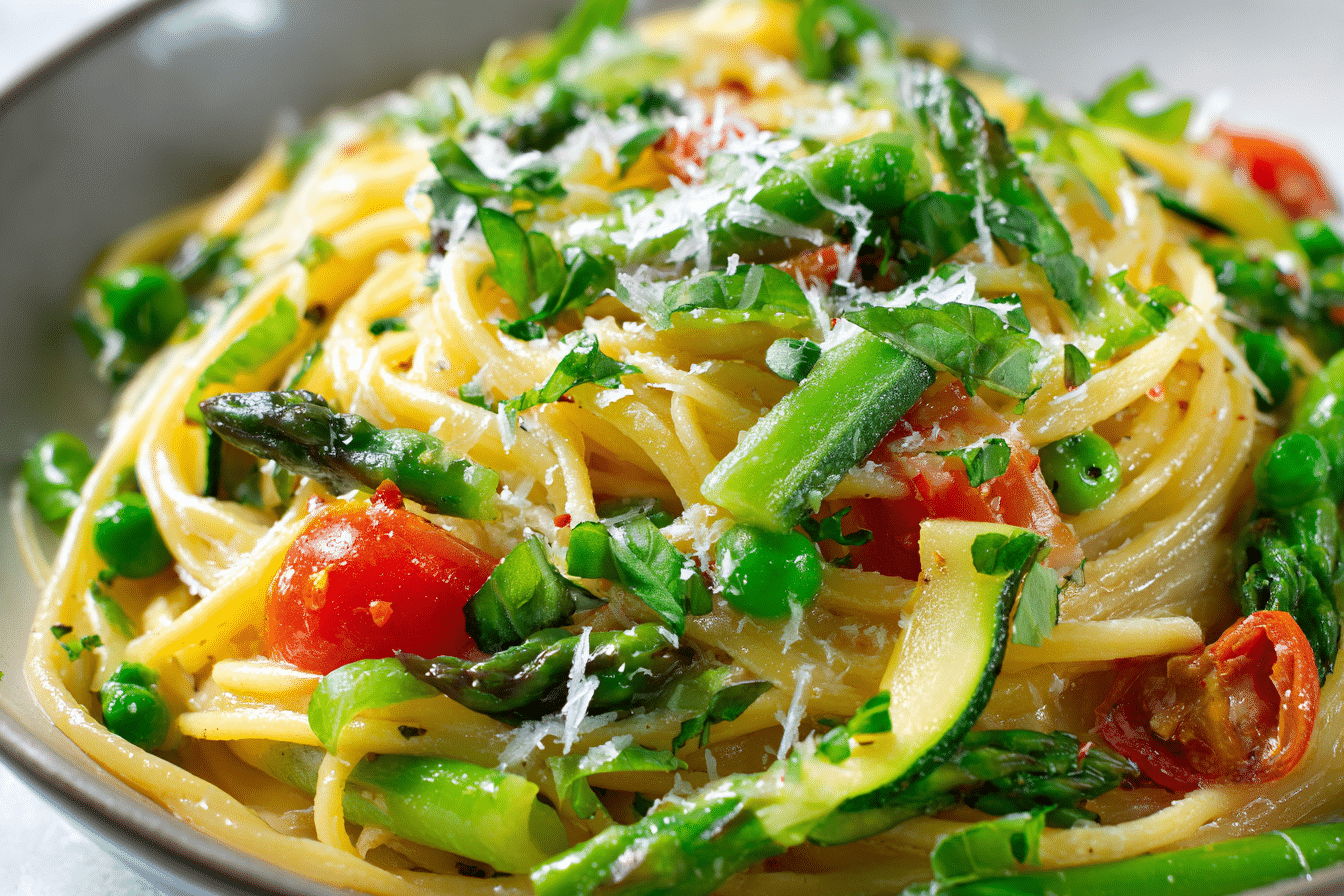
Spring Vegetable Pasta is a light and vibrant dish that celebrates the crisp, delicate flavors of seasonal produce. With tender pasta tossed alongside bright green vegetables and a simple, silky sauce, this recipe captures the essence of spring in every forkful.
This dish is all about freshness and balance. The vegetables remain slightly crisp, the pasta provides a comforting base, and the sauce gently ties everything together without overpowering the natural flavors. It’s a go-to meal when you want something satisfying yet not too heavy.
Ingredients Overview
Spring Vegetable Pasta relies on a combination of fresh vegetables, pasta, and a light sauce to create its signature character. The pasta acts as the base, with shapes like penne, farfalle, or spaghetti working well to hold the vegetables and sauce.
The vegetables are the highlight of the dish. Common spring choices include asparagus, peas, zucchini, and green beans. These vegetables bring a mix of textures, from tender-crisp to slightly firm, and add a naturally sweet and earthy flavor profile.
Garlic and shallots form the aromatic base, adding depth without overshadowing the vegetables. Olive oil helps carry these flavors and adds a gentle richness.
Lemon juice and zest brighten the dish, bringing a subtle citrus note that enhances the vegetables. Parmesan cheese contributes a savory, slightly salty finish, while pasta water helps bind the sauce and create a smooth coating.
Substitutions are easy to manage. Broccoli can replace asparagus, spinach can stand in for peas, and whole wheat or gluten-free pasta can be used without affecting the overall structure of the dish.
Ingredients
12 ounces penne or farfalle pasta
2 tablespoons olive oil
2 cloves garlic, minced
1 small shallot, finely chopped
1 cup asparagus, cut into 1-inch pieces
1 cup green beans, trimmed and cut
1 cup fresh or frozen peas
1 medium zucchini, sliced
1/2 teaspoon salt
1/4 teaspoon black pepper
1/2 teaspoon dried Italian seasoning
1/4 teaspoon red pepper flakes (optional)
1 lemon, zested and juiced
1/2 cup grated Parmesan cheese
1/3 cup reserved pasta water
2 tablespoons fresh parsley, chopped
1 tablespoon butter (optional)
Step-by-Step Instructions
Bring a large pot of salted water to a boil and cook the pasta according to package instructions until al dente. Before draining, reserve about one-third cup of pasta water. Drain and set aside.
While the pasta cooks, prepare all vegetables so they are ready to go. This helps maintain a smooth cooking process and prevents overcooking.
Heat olive oil in a large skillet over medium heat. Add the chopped shallot and cook for 2–3 minutes until softened. Stir in the garlic and cook for about 30 seconds until fragrant.
Add the asparagus and green beans first, as they require slightly longer cooking time. Sauté for 3–4 minutes, stirring occasionally, until they begin to soften but still retain a slight firmness.
Next, add the zucchini and peas. Continue cooking for another 2–3 minutes until all vegetables are tender-crisp. Avoid overcooking, as the vegetables should keep their bright color and slight bite.
Season the vegetables with salt, black pepper, Italian seasoning, and red pepper flakes if using.
Add the cooked pasta directly into the skillet. Pour in the reserved pasta water and toss everything together gently. The starch in the water helps create a light sauce that coats the pasta evenly.
Stir in the lemon zest and juice, followed by the Parmesan cheese. Mix until the cheese melts and forms a smooth, cohesive sauce.
If using butter, add it at this stage for a slightly richer texture. Toss again until everything is well combined.
Finish with freshly chopped parsley and taste for seasoning adjustments before serving.
Tips, Variations & Substitutions
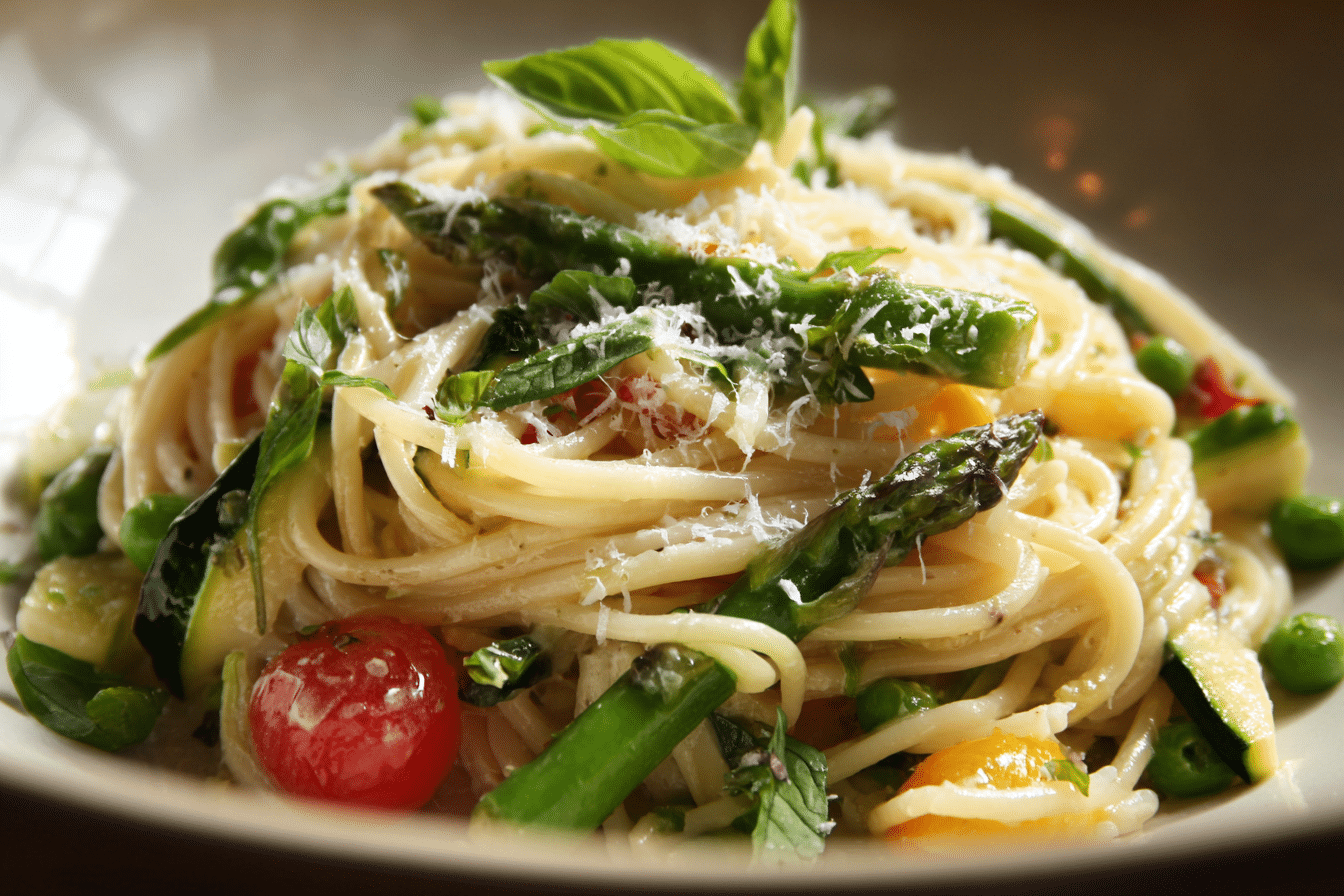
For the best results, use fresh, in-season vegetables. This keeps the dish flavorful without requiring heavy sauces or extra seasoning.
If you prefer a protein addition, grilled chicken, shrimp, or white beans can be mixed in. These options complement the light and fresh profile of the dish.
For a dairy-free version, skip the Parmesan and butter, and add a drizzle of olive oil or a sprinkle of nutritional yeast for added flavor.
A creamier variation can be achieved by adding a splash of cream along with the pasta water. This creates a slightly richer sauce while maintaining balance.
If asparagus is unavailable, broccoli or snap peas can be used. Spinach can also be added at the end for extra greens.
To add texture, consider topping the dish with toasted breadcrumbs or nuts for a subtle crunch.
Serving Ideas & Occasions
Spring Vegetable Pasta is perfect for light lunches, casual dinners, or outdoor gatherings. It works well as a main course or as a side dish alongside grilled meats or seafood.
Serve it with a crisp green salad and a slice of warm bread for a complete meal. The freshness of the vegetables pairs nicely with simple sides that do not overpower the dish.
For drinks, a chilled white wine or sparkling water with citrus complements the bright flavors.
This dish is especially fitting for spring and early summer, when fresh produce is at its peak and lighter meals are more appealing.
Nutritional & Health Notes
This pasta dish offers a balanced combination of carbohydrates, fiber, and healthy fats. The variety of vegetables provides essential vitamins and minerals, supporting overall nutrition.
Olive oil contributes heart-friendly fats, while Parmesan adds protein and calcium. The lemon adds brightness without additional calories.
Using whole grain pasta can increase fiber content, helping support digestion and sustained energy.
Adjusting the amount of cheese and butter allows control over fat content, making the dish adaptable to different dietary needs.
Overall, this recipe is a practical way to include more vegetables in a satisfying and flavorful meal.
FAQs
Can I make Spring Vegetable Pasta ahead of time?
Yes, you can prepare this dish ahead, but it is best enjoyed fresh for optimal texture. If making in advance, store the pasta and vegetables separately if possible. When reheating, add a splash of water or broth and warm gently on the stove. This helps maintain moisture and prevents the pasta from becoming dry or sticky.
What pasta shape works best?
Short pasta like penne or farfalle works well because it holds the vegetables and sauce effectively. Long pasta such as spaghetti can also be used if preferred. The key is to cook the pasta until al dente so it maintains structure when tossed with the vegetables.
Can I use frozen vegetables?
Yes, frozen vegetables can be used, especially peas or green beans. Thaw them before cooking and adjust cooking time slightly to avoid excess moisture. Fresh vegetables are ideal for texture, but frozen options are convenient and still provide good flavor.
How do I keep vegetables from getting mushy?
Cook vegetables in stages, starting with those that take longer. Keep the heat at medium and avoid overcrowding the pan. Stir occasionally and remove from heat while they still have a slight firmness. This preserves both texture and color.
Can I add protein to this dish?
Yes, grilled chicken, shrimp, or tofu are excellent additions. Cook them separately and add at the end to maintain proper texture. These proteins blend well with the light and fresh flavors of the dish.
Is this dish suitable for a dairy-free diet?
It can easily be made dairy-free by omitting Parmesan and butter. Replace them with olive oil or a dairy-free alternative. The lemon and vegetables provide enough flavor to keep the dish satisfying.
What herbs work best in this recipe?
Fresh herbs like parsley, basil, or chives complement the vegetables well. Add them at the end to maintain their freshness and aroma. Dried herbs can be used during cooking, but fresh herbs provide a brighter finish.
PrintSpring Vegetable Pasta: 7 Amazing Fresh Colorful Bowl
A light and colorful pasta dish featuring fresh spring vegetables tossed in a simple, flavorful sauce.
Ingredients
12 ounces penne or farfalle pasta
2 tablespoons olive oil
2 cloves garlic, minced
1 small shallot, chopped
1 cup asparagus pieces
1 cup green beans
1 cup peas
1 medium zucchini, sliced
1/2 teaspoon salt
1/4 teaspoon black pepper
1/2 teaspoon Italian seasoning
1/4 teaspoon red pepper flakes
1 lemon, zested and juiced
1/2 cup Parmesan cheese
1/3 cup pasta water
2 tablespoons parsley
1 tablespoon butter
Instructions
- Cook pasta in salted boiling water until al dente and reserve pasta water.
- Sauté shallot in olive oil until soft, then add garlic.
- Cook asparagus and green beans until slightly tender.
- Add zucchini and peas and cook briefly.
- Season vegetables and stir in cooked pasta.
- Add pasta water, lemon zest, and juice.
- Mix in Parmesan and butter until smooth.
- Finish with parsley and serve warm.
Notes
Use fresh vegetables for best texture.
Do not overcook vegetables.
Add protein if desired.