
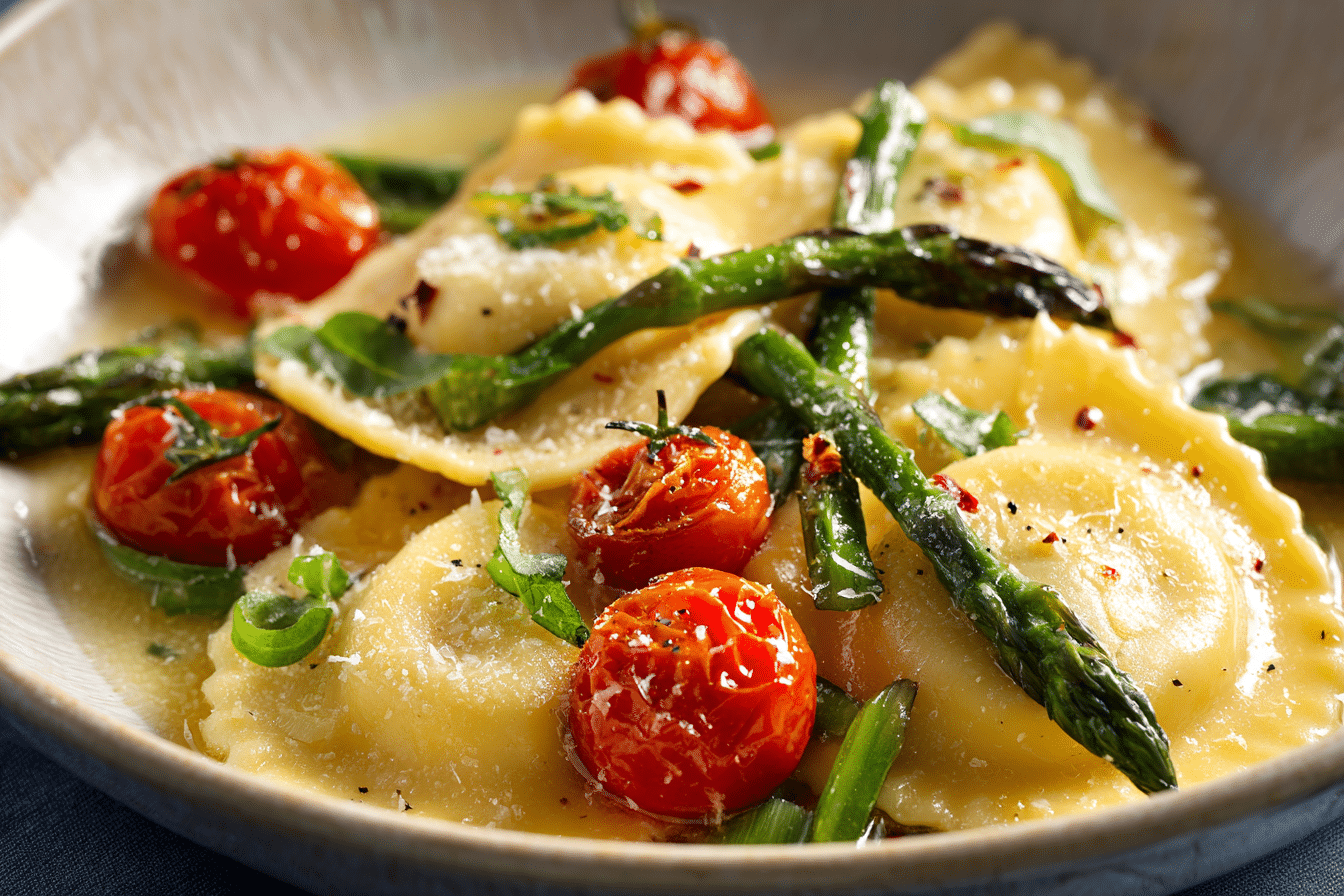
Ravioli with Tomatoes, Asparagus, Garlic, and Herbs is a light yet satisfying dish that highlights simple ingredients at their seasonal best. Tender ravioli pairs beautifully with juicy tomatoes and crisp asparagus, while garlic and fresh herbs bring depth and aroma to every bite.
This dish offers a balance between richness and freshness. The ravioli provides a soft, filled base, while the vegetables keep the overall flavor bright and clean. It comes together quickly, making it ideal for weeknight meals or relaxed gatherings when you want something elegant without complicated preparation.
Ingredients Overview
Ravioli serves as the centerpiece, offering a variety of filling options such as cheese, spinach, or mushroom. The choice of filling subtly influences the overall flavor, but most varieties work well with the light vegetable sauce.
Cherry tomatoes bring a gentle sweetness and juiciness that forms the base of the sauce. As they cook, they soften and release their juices, creating a natural, light coating for the pasta.
Asparagus adds a crisp, slightly grassy note that complements the sweetness of the tomatoes. When cooked just right, it remains tender with a slight bite, adding texture contrast.
Garlic builds a savory foundation, infusing the oil and tying all the ingredients together. A moderate amount is enough to deepen flavor without overpowering the dish.
Olive oil provides richness and helps carry the flavors of garlic and herbs throughout the sauce. Fresh herbs like basil and parsley add brightness and a fragrant finish.
Parmesan cheese contributes a subtle savory note and helps bind the sauce lightly to the ravioli. A splash of lemon juice can be added for a gentle lift, enhancing the freshness of the vegetables.
Ingredients
18 ounces fresh or frozen ravioli (cheese or spinach-filled)
2 tablespoons olive oil
3 cloves garlic, minced
1 bunch asparagus, trimmed and cut into 2-inch pieces
1 1/2 cups cherry tomatoes, halved
1/2 teaspoon salt
1/4 teaspoon black pepper
1/2 teaspoon red pepper flakes (optional)
1/4 cup grated Parmesan cheese
2 tablespoons chopped fresh basil
2 tablespoons chopped fresh parsley
1 tablespoon lemon juice
1/4 cup reserved pasta water
Step-by-Step Instructions
Bring a large pot of salted water to a gentle boil. Add the ravioli and cook according to package directions, usually 3–5 minutes for fresh ravioli or slightly longer for frozen. Stir gently to prevent sticking. Once the ravioli float and are tender, reserve about 1/4 cup of pasta water and drain carefully.
While the ravioli cooks, heat olive oil in a large skillet over medium heat. Add the minced garlic and cook for about 30 seconds until fragrant. Keep the heat moderate to avoid browning the garlic, which can introduce bitterness.
Add the asparagus pieces to the skillet. Cook for 4–5 minutes, stirring occasionally, until they become bright green and just tender. The goal is to keep a slight firmness for texture.
Stir in the cherry tomatoes and cook for another 3–4 minutes. As they heat, they will begin to soften and release their juices, forming a light sauce. Gently press a few tomatoes with a spoon to encourage this process.
Season the mixture with salt, black pepper, and red pepper flakes if using. Stir well to distribute the seasoning evenly.
Add the cooked ravioli directly into the skillet. Toss gently to coat the pasta with the tomato and asparagus mixture. Pour in a small amount of reserved pasta water to help loosen the sauce and create a silky consistency.
Remove the skillet from heat and stir in the Parmesan cheese, allowing it to melt slightly and bind the sauce. Add the lemon juice for a subtle brightness.
Finish with fresh basil and parsley, tossing lightly to combine. Serve immediately while warm.
Common mistakes include overcooking the ravioli, which can cause them to break apart, or cooking the asparagus too long, resulting in a soft texture. Maintaining moderate heat and watching cooking times closely helps achieve the best result.
Tips, Variations & Substitutions
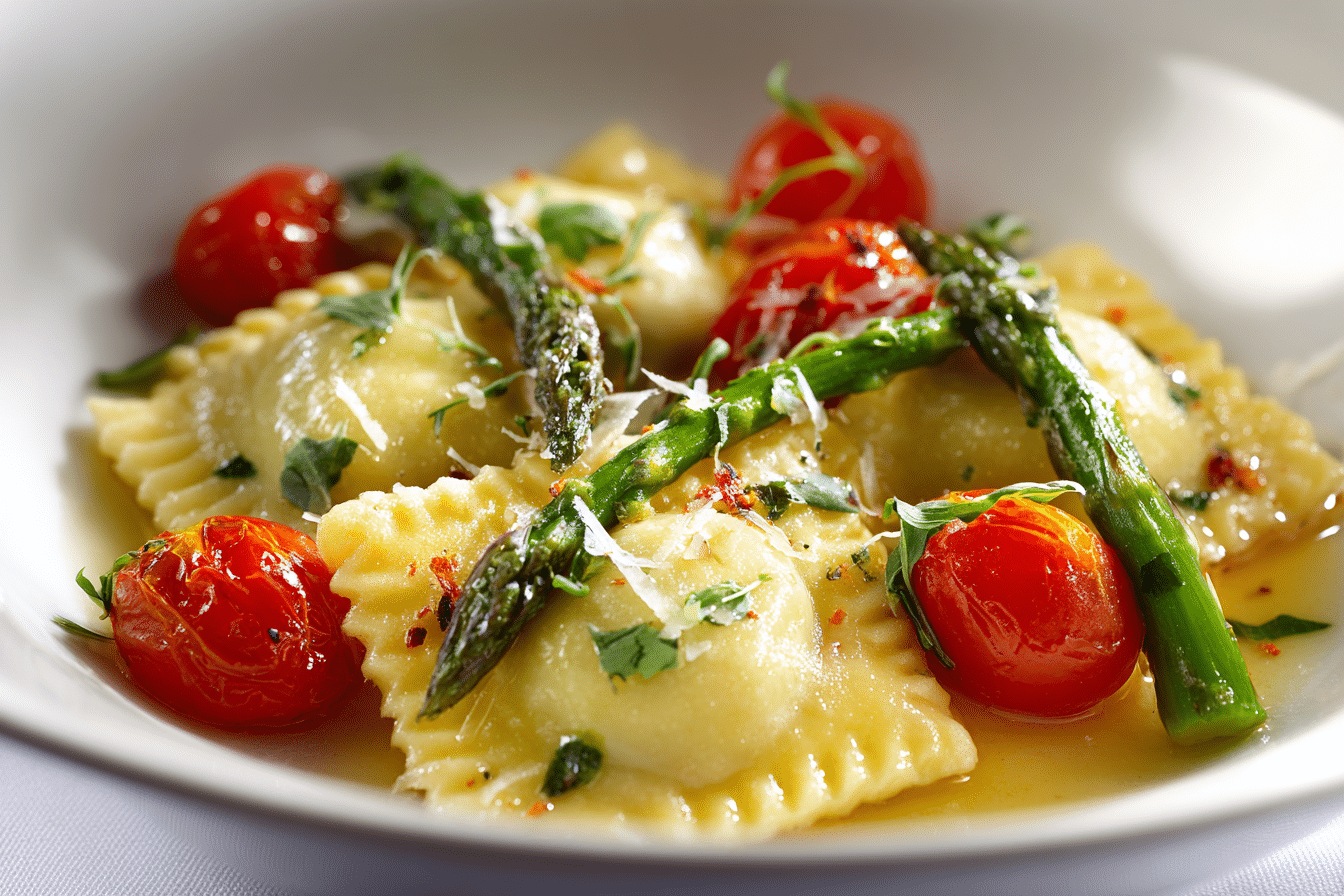
For added protein, grilled chicken or shrimp can be included. These additions blend well with the light sauce and turn the dish into a more filling meal.
If asparagus is not available, green beans or zucchini can be used as alternatives. Both provide a similar texture and fresh flavor.
For a richer version, a small amount of butter can be added along with the olive oil. This creates a slightly deeper sauce without overpowering the vegetables.
A handful of toasted pine nuts or walnuts can be sprinkled on top for added texture. Their subtle crunch complements the soft ravioli.
To make the dish dairy-free, omit the Parmesan cheese or replace it with a plant-based alternative. The dish will still have plenty of flavor from the vegetables and herbs.
Whole wheat or gluten-free ravioli can be used depending on dietary needs, though cooking times may vary slightly.
Serving Ideas & Occasions
Ravioli with Tomatoes, Asparagus, Garlic, and Herbs pairs well with a simple green salad dressed in a light vinaigrette. The crispness of the salad balances the soft texture of the pasta.
A slice of warm bread or a small portion of roasted vegetables makes a great addition, helping round out the meal.
For drinks, a light white wine such as Pinot Grigio or a sparkling water with lemon complements the freshness of the dish.
This recipe is well-suited for spring meals, casual dinners, or small gatherings. Its quick preparation and fresh flavor make it a reliable option when time is limited but you still want something thoughtfully prepared.
Nutritional & Health Notes
This dish offers a balance of carbohydrates from the ravioli and nutrients from fresh vegetables. Asparagus provides fiber and vitamins, while tomatoes contribute antioxidants and natural sweetness.
Olive oil adds healthy fats that support overall balance in the meal. Parmesan cheese contributes protein and calcium, though it can be adjusted based on preference.
For a lighter version, reduce the cheese slightly and increase the proportion of vegetables. Choosing whole grain ravioli can add fiber and improve satiety.
Portion size plays a role in maintaining balance, especially when serving this dish as a main course. Pairing it with additional vegetables can help create a more nutrient-dense meal.
FAQs
Can I use frozen ravioli for this recipe?
Yes, frozen ravioli works very well and is a convenient option. Simply cook it according to package instructions, usually adding a minute or two compared to fresh ravioli. Be careful not to overcook, as frozen ravioli can become too soft if left in boiling water too long. Once cooked, handle gently when draining and transferring to the skillet to prevent tearing. The final dish will still have excellent texture and flavor.
How do I keep ravioli from breaking apart?
The key is gentle handling and proper cooking time. Use a large pot with enough water so the ravioli can move freely while cooking. Stir lightly and avoid overcrowding. Once they float to the surface, they are usually done or close to it. Drain carefully and avoid tossing too aggressively in the skillet. Keeping heat moderate also helps maintain their structure when combining with the sauce.
Can I make this dish ahead of time?
This dish is best served fresh, as ravioli can become soft if stored too long after cooking. However, you can prepare the vegetable mixture in advance and store it separately. When ready to serve, cook the ravioli and combine with the reheated vegetables. Adding a splash of water or broth during reheating helps restore the sauce consistency. Fresh herbs should always be added just before serving for best flavor.
What herbs work best in this recipe?
Basil and parsley are classic choices that provide a bright, fresh finish. Other herbs like chives or thyme can also be used for subtle variation. It is best to use fresh herbs rather than dried, as they contribute a more vibrant flavor. Add them at the end of cooking to preserve their aroma and color. Mixing a couple of herbs together can create a more layered taste.
Can I add a cream sauce instead?
Yes, a light cream sauce can be added for a richer version. Simply stir in a small amount of cream after the tomatoes have softened, allowing it to simmer briefly before adding the ravioli. Keep the quantity moderate so it does not overpower the fresh vegetables. The result will be a slightly more indulgent dish while still maintaining balance.
How do I store leftovers?
Store leftovers in an airtight container in the refrigerator for up to two days. Reheat gently on the stovetop over low heat, adding a small amount of water or broth to loosen the sauce. Avoid high heat, as it can cause the ravioli to break apart. While still enjoyable, the texture is best when the dish is freshly made.
Can I make this recipe vegan?
Yes, this recipe can be adapted for a vegan diet. Use plant-based ravioli and omit the Parmesan cheese or replace it with a dairy-free alternative. The vegetable base remains the same and provides plenty of flavor. Adjust seasoning slightly to maintain balance, especially if removing cheese, as it contributes a savory element.
PrintRavioli with Tomatoes, Asparagus, Garlic, and Herbs: 6 Fresh Comforting
A light ravioli dish with tomatoes, asparagus, garlic, and fresh herbs in a simple, flavorful sauce.
Ingredients
18 ounces ravioli
2 tablespoons olive oil
3 cloves garlic
1 bunch asparagus
1 1/2 cups cherry tomatoes
1/2 teaspoon salt
1/4 teaspoon black pepper
1/2 teaspoon red pepper flakes
1/4 cup Parmesan cheese
2 tablespoons basil
2 tablespoons parsley
1 tablespoon lemon juice
1/4 cup pasta water
Instructions
- Cook ravioli in salted water until tender, then drain and reserve pasta water.
- Heat olive oil and cook garlic until fragrant.
- Add asparagus and cook until just tender.
- Stir in tomatoes and cook until softened.
- Season with salt, pepper, and red pepper flakes.
- Add ravioli and a splash of pasta water, tossing gently.
- Stir in Parmesan and lemon juice.
- Finish with basil and parsley before serving.
Notes
Cook vegetables until just tender to keep texture and freshness.