
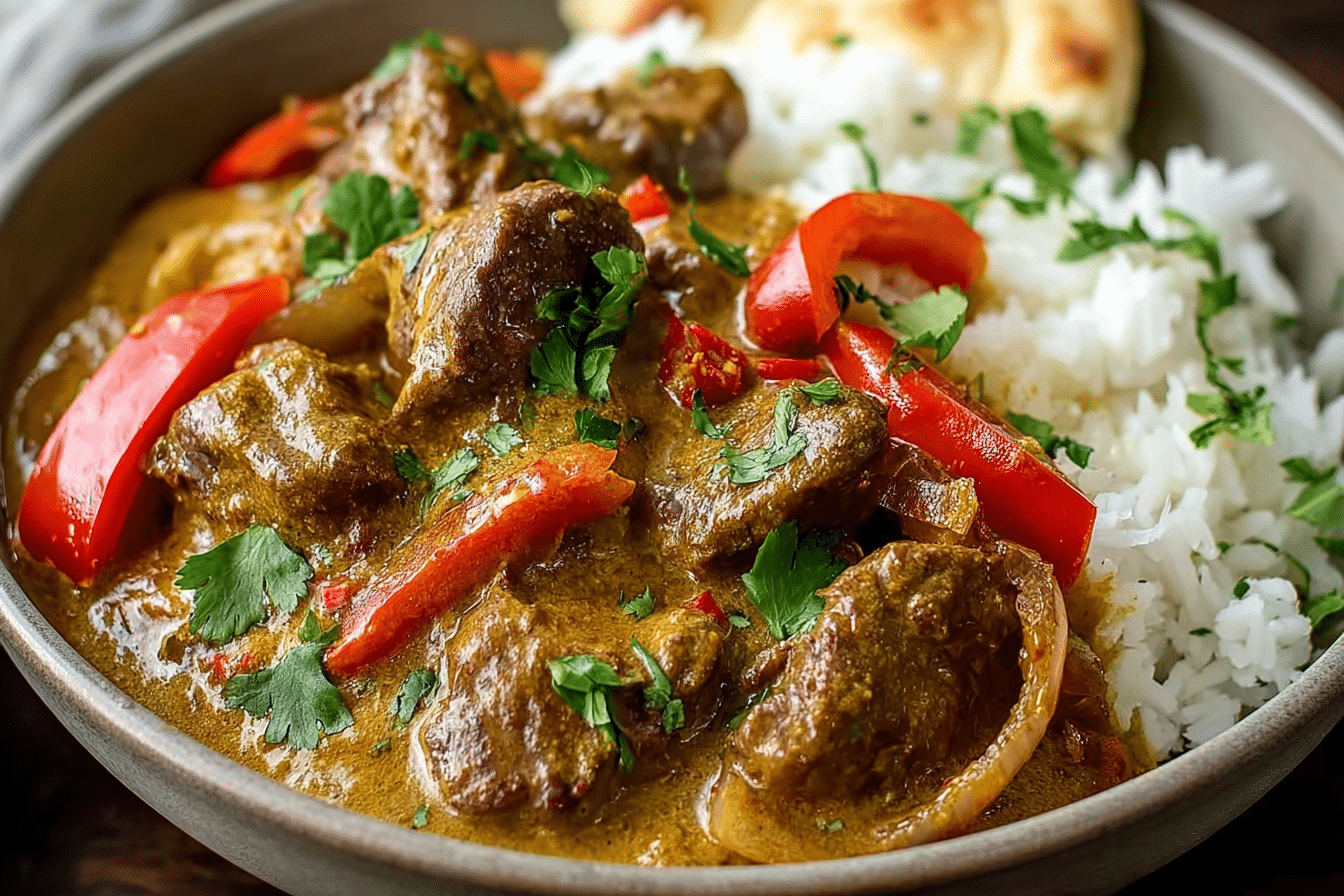
Slow Cooker Beef Coconut Curry is a rich, gently spiced dish that combines tender beef with a creamy coconut-based sauce. As it cooks slowly, the flavors deepen and meld together, creating a dish that feels both hearty and satisfying without requiring constant attention.
This Slow Cooker Beef Coconut Curry Recipe is ideal for busy days when you want a warm, home-cooked meal waiting for you. The slow cooking process allows the beef to become incredibly soft, while the coconut milk balances the spices with a smooth, mellow finish.
With simple pantry ingredients and a straightforward method, this recipe brings together bold flavor and ease in one pot. It pairs beautifully with rice or flatbread, making it a reliable choice for family meals or casual gatherings.
Ingredients Overview
The heart of this Slow Cooker Beef Coconut Curry Recipe is the beef. Chuck roast or stewing beef works best because it becomes tender over long cooking times. As the connective tissue breaks down, it creates a rich texture that blends well with the sauce.
Coconut milk forms the base of the curry, giving it a creamy consistency and a subtle sweetness. It softens the spices and creates a smooth, well-rounded sauce that coats the beef evenly.
A blend of curry powder, garlic, ginger, and onion builds the flavor profile. Curry powder provides warmth and depth, while fresh garlic and ginger add a gentle sharpness that balances the richness of the coconut milk.
Tomato paste contributes a slight tang and deep color, while broth helps adjust the consistency and keeps everything from becoming too thick during cooking.
Vegetables like bell peppers or carrots can be added for texture and variety. They absorb the sauce while maintaining a slight bite, adding contrast to the tender beef.
If substitutions are needed, chicken can replace beef for a lighter version, though cooking time should be reduced. Light coconut milk can be used, but the sauce will be less creamy. Ground ginger can replace fresh in smaller amounts if necessary.
Ingredients
2 pounds beef chuck, cut into 1 1/2-inch cubes
1 tablespoon oil
1 medium onion, chopped
4 cloves garlic, minced
1 tablespoon fresh ginger, grated
2 tablespoons curry powder
1 teaspoon ground cumin
1 teaspoon paprika
1/2 teaspoon turmeric
1 teaspoon salt
1/2 teaspoon black pepper
2 tablespoons tomato paste
1 can (14 ounces) coconut milk
1/2 cup beef broth
1 tablespoon soy sauce
1 tablespoon lime juice
1 red bell pepper, sliced
1 cup carrots, sliced
Step-by-Step Instructions
Begin by heating a skillet over medium-high heat. Add the oil and sear the beef cubes in batches, allowing each side to brown. This step adds depth to the dish by creating a rich outer layer on the meat. Avoid overcrowding the pan, as this can cause the beef to steam instead of brown.
Transfer the seared beef to the slow cooker. In the same pan, add the chopped onion and cook for about 3–4 minutes until softened. Stir in the garlic and ginger, cooking briefly until fragrant.
Add the curry powder, cumin, paprika, and turmeric to the pan. Stir for about a minute to toast the spices, which helps bring out their full flavor. Mix in the tomato paste and cook for another minute until it darkens slightly.
Pour in a small amount of the beef broth to deglaze the pan, scraping up any browned bits. This step captures flavor that would otherwise be left behind. Transfer everything into the slow cooker.
Add the remaining broth, coconut milk, soy sauce, salt, and pepper. Stir gently to combine all ingredients. Cover and cook on low for 7–8 hours or on high for 4–5 hours.
About 30 minutes before the cooking time ends, add the sliced bell pepper and carrots. This prevents them from becoming too soft while still allowing them to absorb the sauce.
Once the beef is fork-tender and the sauce has thickened slightly, stir in the lime juice. Taste and adjust seasoning if needed.
Common mistakes include skipping the browning step, which reduces flavor, and adding vegetables too early, which can make them overly soft. Keeping an eye on timing helps maintain the right texture throughout the dish.
Tips, Variations & Substitutions
For a deeper flavor, add a small amount of fish sauce along with the soy sauce. It adds a savory note without overpowering the dish.
If you prefer a thicker curry, remove the lid during the last 20–30 minutes of cooking to allow excess liquid to evaporate slightly. Alternatively, a slurry of cornstarch and water can be stirred in at the end.
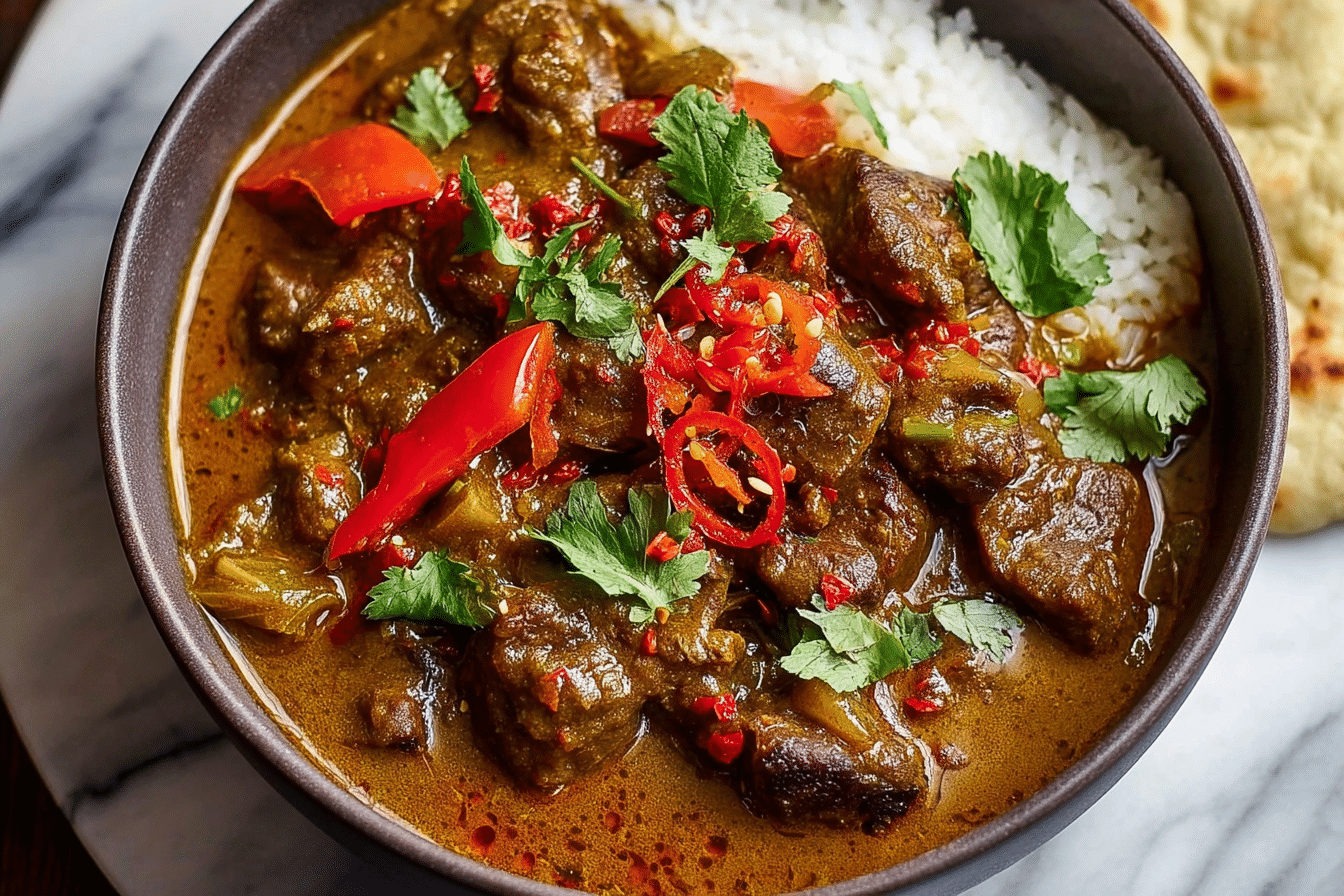
To make the dish spicier, add chili flakes or a chopped fresh chili during cooking. Adjust based on your preference.
Chicken thighs can replace beef for a faster-cooking option. In this case, reduce the cooking time to avoid overcooking the meat.
For a vegetable-focused version, substitute the beef with chickpeas, potatoes, and cauliflower. These ingredients hold up well in the slow cooker and absorb the curry flavors nicely.
Serving with jasmine rice or basmati rice helps balance the richness of the sauce, while flatbread can be used to scoop up the curry.
Serving Ideas & Occasions
Slow Cooker Beef Coconut Curry Recipe is well-suited for relaxed dinners and gatherings where a warm, filling dish is appreciated. Its slow-cooked nature makes it especially useful for weekend meals or days when you want minimal hands-on cooking.
Serve it over steamed rice to soak up the sauce, or pair it with naan or flatbread for a different texture. A side of lightly dressed greens or cucumber salad adds freshness and contrast.
For drinks, consider serving with sparkling water with citrus or a mild herbal tea. These options complement the richness of the curry without overwhelming the flavors.
This dish also works well for meal preparation, as the flavors continue to develop when stored and reheated.
Nutritional & Health Notes
This Slow Cooker Beef Coconut Curry Recipe provides a good balance of protein and fats, with the beef offering essential nutrients like iron and protein. Coconut milk contributes healthy fats, though it should be used in moderation as part of a balanced diet.
Adding vegetables such as carrots and bell peppers increases fiber and provides vitamins that support overall nutrition. Serving the curry with whole grain rice can further improve its nutritional profile.
Reducing the amount of added salt or using low-sodium broth can help manage sodium intake. Adjusting portion sizes and pairing with fresh sides helps maintain a balanced meal.
FAQs
Can I skip browning the beef?
While it is possible to skip browning, it is not recommended. Browning creates a deeper flavor by forming a caramelized surface on the meat. This step adds richness to the overall dish.
If you are short on time, you can place the raw beef directly into the slow cooker, but the final flavor will be less developed. Taking a few extra minutes to brown the meat makes a noticeable difference.
Can I cook this on high instead of low?
Yes, this recipe can be cooked on the high setting for 4–5 hours instead of 7–8 hours on low. The beef will still become tender, though the slower method tends to produce a slightly richer flavor.
If using the high setting, check the texture of the beef toward the end of cooking to avoid overcooking. Both methods work, but the low setting is generally preferred for the best results.
How do I store leftovers?
Allow the curry to cool completely before transferring it to an airtight container. It can be stored in the refrigerator for up to four days.
Reheat gently on the stovetop or in the microwave, adding a small amount of water or broth if the sauce has thickened too much. The flavors often deepen after a day, making leftovers just as enjoyable.
Can I freeze this curry?
Yes, this curry freezes well. Place cooled portions into freezer-safe containers and store for up to three months.
When ready to use, thaw in the refrigerator overnight and reheat slowly. Stir well during reheating to bring the sauce back to a smooth consistency.
What vegetables work best in this curry?
Carrots, bell peppers, and potatoes are all good choices for this Slow Cooker Beef Coconut Curry Recipe. They hold their shape during cooking and absorb the flavors of the sauce.
More delicate vegetables like spinach can be added at the end of cooking to prevent them from becoming too soft.
Can I make this dairy-free?
This recipe is naturally dairy-free because it uses coconut milk instead of cream. It is a suitable option for those avoiding dairy products.
Just double-check any store-bought ingredients like broth or curry powder to confirm they do not contain hidden dairy additives.
How can I thicken the sauce?
If the sauce is thinner than desired, remove the lid during the final stage of cooking to allow some liquid to evaporate. This naturally thickens the curry.
Alternatively, mix a small amount of cornstarch with water and stir it into the curry. Let it cook for a few minutes until the sauce thickens to your preference.
PrintSlow Cooker Beef Coconut Curry Recipe – 6 Flavorful Comforts

A slow-cooked beef curry made with coconut milk, warm spices, and tender chunks of beef in a rich, creamy sauce.
Ingredients
2 pounds beef chuck, cubed
1 tablespoon oil
1 onion, chopped
4 cloves garlic, minced
1 tablespoon ginger, grated
2 tablespoons curry powder
1 teaspoon cumin
1 teaspoon paprika
1/2 teaspoon turmeric
1 teaspoon salt
1/2 teaspoon black pepper
2 tablespoons tomato paste
1 can coconut milk
1/2 cup beef broth
1 tablespoon soy sauce
1 tablespoon lime juice
1 red bell pepper
1 cup carrots
Instructions
- Sear beef in a hot pan until browned.
- Transfer beef to slow cooker.
- Cook onion, garlic, and ginger in the same pan.
- Add spices and tomato paste, then deglaze with broth.
- Transfer mixture to slow cooker.
- Add coconut milk, remaining broth, and seasonings.
- Cook on low for 7–8 hours or high for 4–5 hours.
- Add vegetables in the last 30 minutes.
- Stir in lime juice before serving.
Notes
Browning the beef adds deeper flavor. Add vegetables later to keep their texture.