
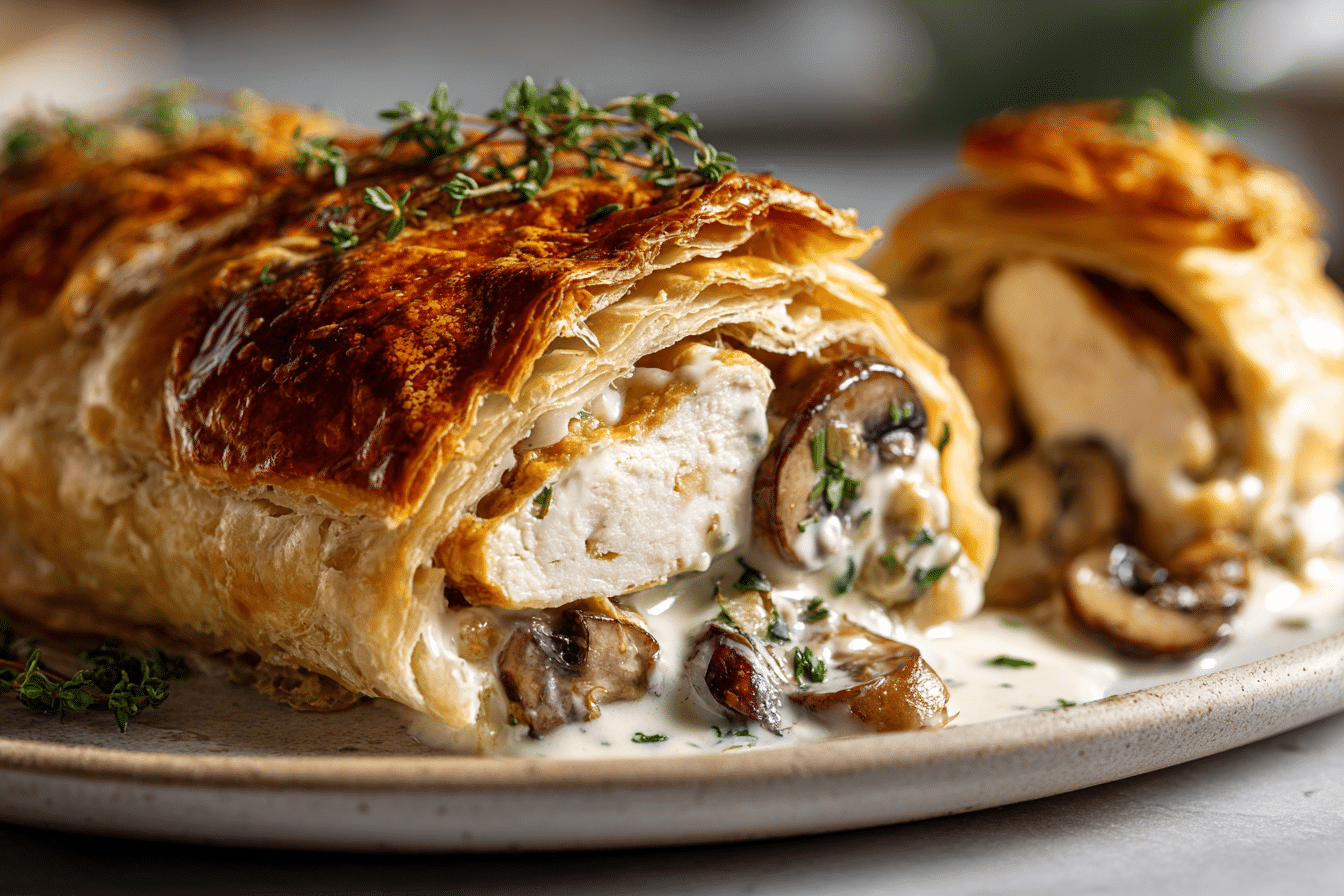
Irresistible Chicken Wellington with Dijon Cream Sauce is a refined yet comforting dish that wraps tender chicken in a flaky, golden pastry. The addition of a creamy Dijon sauce brings a smooth, tangy contrast that complements the richness of the pastry and the savory filling.
This dish offers a balance of textures and flavors, from the crisp outer layer to the juicy chicken inside. It’s a wonderful choice when you want something that feels special while still being approachable to prepare at home.
Ingredients Overview
Chicken Wellington is built around a few key components that work together beautifully. Boneless, skinless chicken breasts are the centerpiece, providing a lean and tender protein. They are often seared first to lock in flavor and maintain moisture during baking.
Puff pastry creates the signature golden crust. When baked, it becomes light and flaky, offering a crisp contrast to the soft filling. Store-bought puff pastry works well and keeps preparation simple.
Mushrooms are commonly used in the filling, finely chopped and cooked down to remove moisture. This creates a concentrated, savory layer that pairs perfectly with the chicken. Garlic and shallots add aromatic depth, enhancing the overall flavor.
Dijon mustard plays a dual role, adding a subtle tang to both the chicken and the cream sauce. Its sharpness cuts through the richness of the pastry and cream, creating balance.
The Dijon cream sauce is made with heavy cream, mustard, and a touch of broth. It adds a smooth, velvety finish that ties the entire dish together.
Together, these ingredients create a dish that feels layered, rich, and satisfying without being overly complicated.
Ingredients
4 boneless, skinless chicken breasts
1 sheet puff pastry, thawed
2 cups mushrooms, finely chopped
1 small shallot, finely chopped
3 cloves garlic, minced
2 tablespoons Dijon mustard
1/2 cup heavy cream
1/2 cup chicken broth
1 tablespoon olive oil
1 tablespoon butter
1 egg, beaten
1 teaspoon salt
1/2 teaspoon black pepper
1 teaspoon fresh thyme (optional)
Step-by-Step Instructions
Preheat your oven to 400°F (200°C). Line a baking sheet with parchment paper and set aside.
Season the chicken breasts with salt and black pepper. Heat olive oil in a skillet over medium heat and sear the chicken for about 3–4 minutes per side until lightly golden. The chicken does not need to be fully cooked at this stage. Remove from heat and let cool slightly.
In the same skillet, melt the butter and add the chopped shallot. Cook for 2–3 minutes until softened, then stir in the garlic. Cook briefly until fragrant.
Add the finely chopped mushrooms and cook for 8–10 minutes, stirring occasionally. The mixture should lose its moisture and become thick and slightly browned. Stir in thyme if using, then remove from heat and let cool.
Roll out the puff pastry on a lightly floured surface and cut it into four equal portions. Spread a thin layer of Dijon mustard over each chicken breast, then top with a portion of the mushroom mixture.
Place each chicken breast in the center of a pastry piece. Fold the pastry over the chicken, sealing the edges tightly. Place the wrapped chicken seam-side down on the prepared baking sheet.
Brush the tops with beaten egg to help achieve a golden finish. Bake for 25–30 minutes, or until the pastry is puffed and deeply golden.
While the chicken bakes, prepare the Dijon cream sauce. In a small saucepan, combine the chicken broth and remaining Dijon mustard. Bring to a gentle simmer, then stir in the heavy cream. Cook for 5–7 minutes until slightly thickened. Season with salt and black pepper to taste.
Once the Chicken Wellington is done, let it rest for a few minutes before slicing. Serve warm with the Dijon cream sauce spooned over or alongside.
Tips, Variations & Substitutions
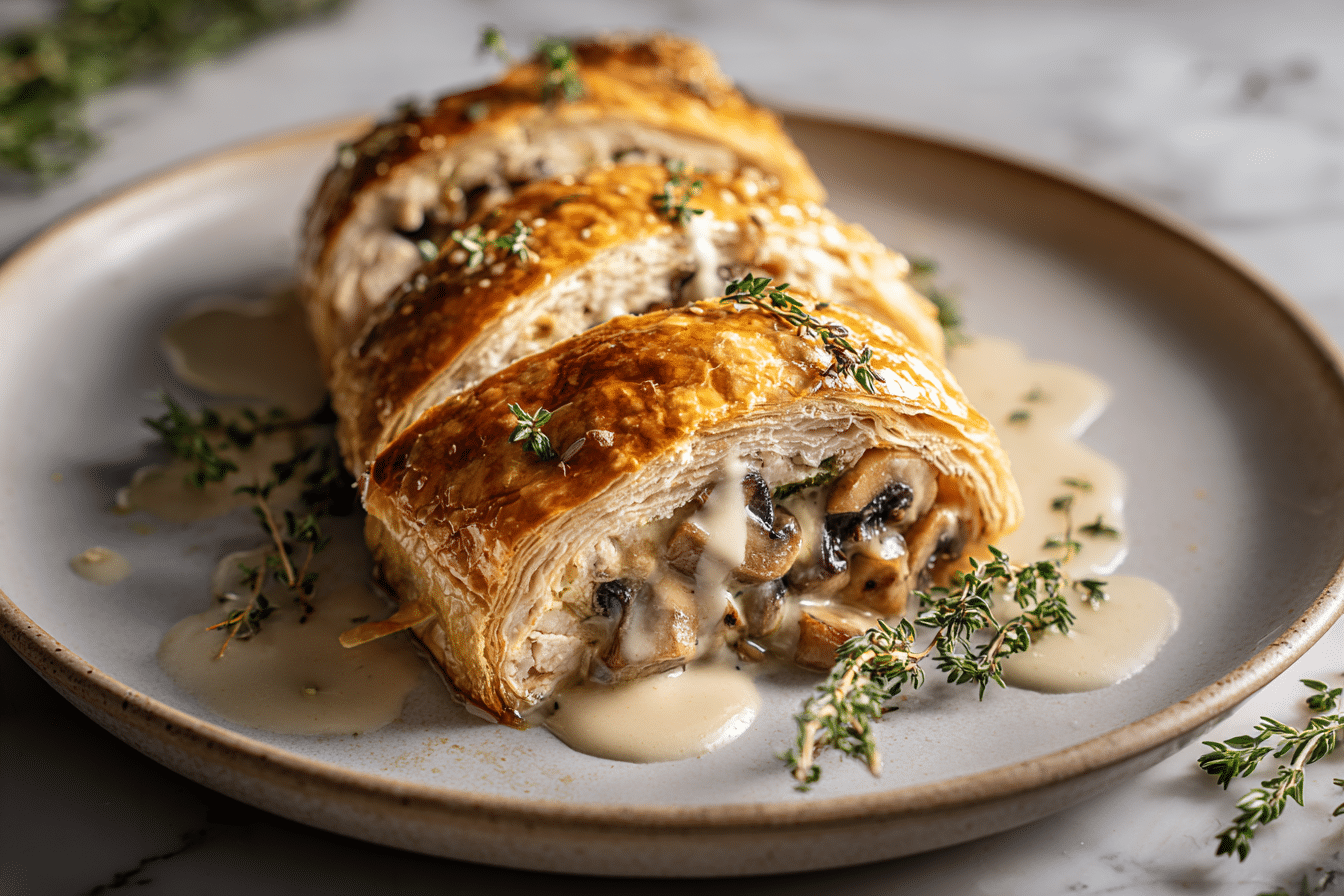
For best results, allow the mushroom mixture to cool completely before assembling. Warm filling can soften the pastry and affect its texture.
If you want an extra layer of flavor, add a thin slice of prosciutto around the chicken before wrapping it in pastry. This adds a subtle savory note and helps keep the chicken moist.
For a lighter version, reduce the amount of cream in the sauce and add a bit more broth. This keeps the sauce flavorful while lowering richness.
You can substitute chicken breasts with chicken thighs for a juicier result. Just adjust the cooking time slightly to ensure they are fully cooked.
If mushrooms are not preferred, a spinach and cheese filling can be used as an alternative while still maintaining a creamy interior.
Serving Ideas & Occasions
Chicken Wellington with Dijon Cream Sauce is ideal for special dinners, holiday meals, or when serving guests. Its elegant presentation makes it suitable for occasions where you want to impress without overly complex preparation.
Serve it with roasted vegetables, mashed potatoes, or a simple green salad. These sides balance the richness of the pastry and sauce.
A light sparkling drink or a crisp white wine pairs well, complementing the creamy and savory elements of the dish.
Nutritional & Health Notes
This dish provides a combination of protein, fats, and carbohydrates. The chicken offers lean protein, while the puff pastry contributes richness and texture.
The cream sauce adds additional fat and calories, so portion size can be adjusted depending on dietary preferences. Using a lighter cream or reducing the quantity can help balance the dish.
Mushrooms add nutrients and a savory element without significantly increasing calories, making them a valuable component of the filling.
Pairing this dish with lighter sides can help create a more balanced meal overall.
FAQs
Can I prepare Chicken Wellington in advance?
Yes, you can assemble the Chicken Wellington ahead of time and store it in the refrigerator for up to 24 hours before baking. Keep it tightly covered to prevent the pastry from drying out. When ready to cook, brush with egg wash and bake as directed.
How do I keep the pastry from becoming soggy?
Make sure the mushroom filling is fully cooked and cooled before assembling. Excess moisture can soften the pastry. Also, avoid overloading the filling, and bake at the correct temperature to help the pastry crisp properly.
Can I freeze Chicken Wellington?
Yes, you can freeze it before baking. Wrap each portion tightly and store for up to one month. When ready to cook, bake from frozen, adding extra time as needed until the pastry is golden and the chicken is cooked through.
What can I use instead of puff pastry?
If puff pastry is not available, you can use crescent dough or phyllo dough. The texture will be different, but both options can still create a crisp outer layer.
How do I know when the chicken is fully cooked?
The internal temperature should reach 165°F (74°C). You can use a meat thermometer inserted into the center of the chicken through the pastry to check doneness.
Can I make the sauce ahead of time?
Yes, the Dijon cream sauce can be made ahead and stored in the refrigerator for up to two days. Reheat gently over low heat, stirring occasionally to maintain a smooth consistency.
Can I add cheese to the filling?
Yes, a small amount of cheese such as Gruyère or mozzarella can be added to the mushroom mixture. It melts during baking and adds an extra layer of richness to the dish.
PrintIrresistible Chicken Wellington with Dijon Cream Sauce: 1 Amazing Comfort Dish
Tender chicken wrapped in flaky pastry and served with a creamy Dijon mustard sauce.
Ingredients
4 chicken breasts
1 sheet puff pastry
2 cups mushrooms, chopped
1 shallot, chopped
3 cloves garlic
2 tablespoons Dijon mustard
1/2 cup heavy cream
1/2 cup chicken broth
1 tablespoon olive oil
1 tablespoon butter
1 egg
1 teaspoon salt
1/2 teaspoon black pepper
1 teaspoon thyme (optional)
Instructions
- Preheat oven to 400°F (200°C).
- Sear seasoned chicken until lightly golden.
- Cook shallot, garlic, and mushrooms.
- Spread mustard on chicken and top with mushrooms.
- Wrap in puff pastry and seal.
- Brush with egg wash and bake until golden.
- Simmer broth, mustard, and cream for sauce.
- Serve chicken with sauce.
Notes
Cool filling before assembling.
Seal pastry well.
Check internal temperature for doneness.