
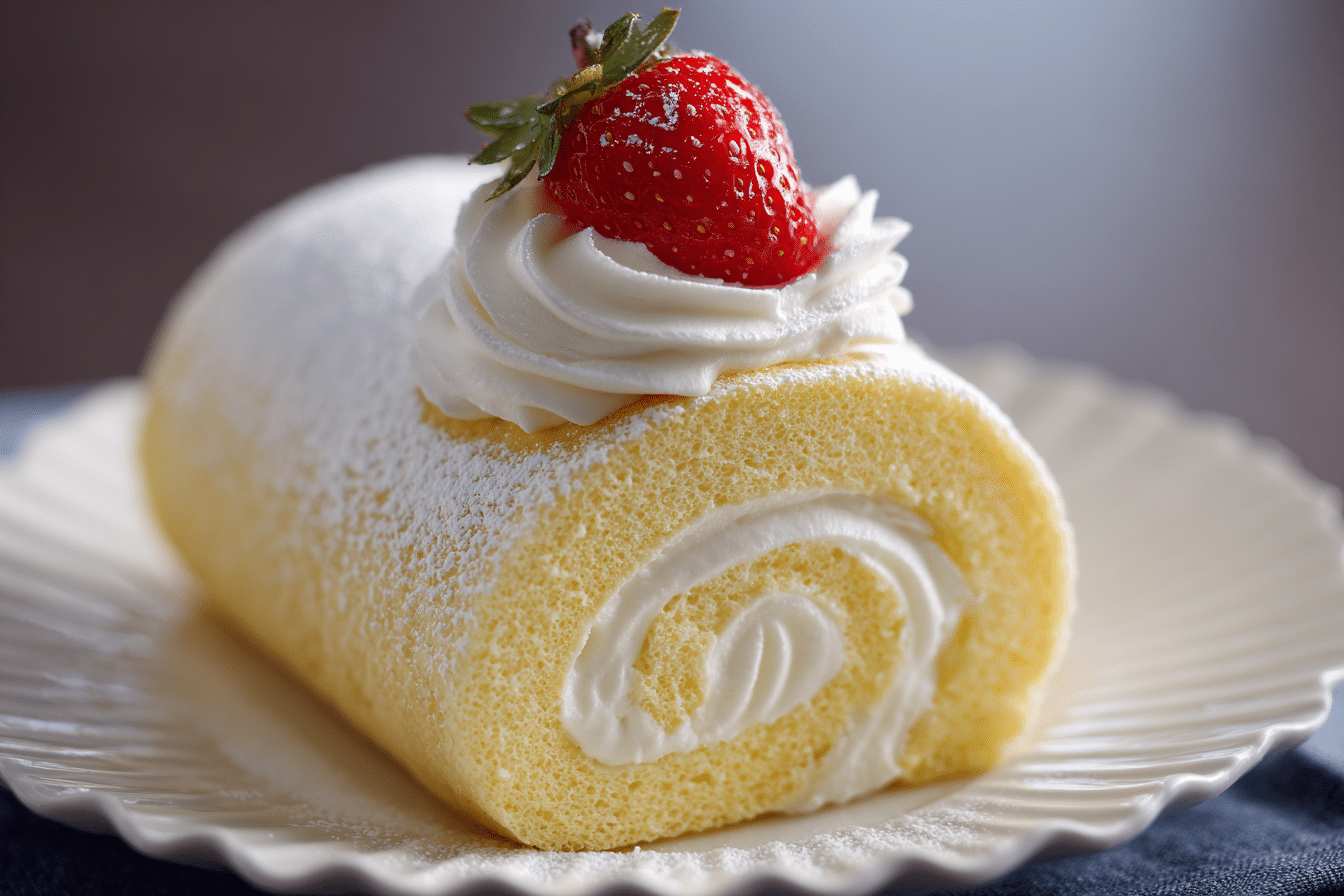
The Japanese Cake Roll, also known as a “Japanese Swiss Roll” or “Castella Roll,” is an exquisite take on the classic rolled sponge cake. This beloved dessert is known for its light-as-air sponge and smooth whipped cream filling, making it a go-to treat in Asian bakeries and home kitchens alike.
Unlike heavier Western versions, the Japanese Cake Roll features a soufflé-style sponge that is incredibly soft and bouncy. The key lies in its delicate folding techniques, low flour content, and carefully whipped egg whites. Whether you enjoy it plain, filled with fruit, or flavored with matcha or cocoa, it’s a beautiful and satisfying treat that tastes as elegant as it looks.
In this recipe, you’ll learn how to make a traditional vanilla Japanese Cake Roll with whipped cream, along with expert tips for a perfect roll every time.
Ingredients Overview
Each component in a Japanese Cake Roll is thoughtfully chosen to achieve a fine balance of flavor and texture. Let’s take a closer look at the core ingredients:
-
Eggs (Room Temperature): The foundation of the sponge. You’ll separate the whites and yolks — the whites are whipped into a stiff meringue for structure, while the yolks enrich the batter. Use large, fresh eggs for best results.
-
Cake Flour: Cake flour has a lower protein content than all-purpose flour, which yields a more tender, soft crumb. If you only have all-purpose flour, substitute by removing 1 tbsp of flour per cup and replacing it with cornstarch.
-
Sugar: Granulated sugar is used in two parts — some is beaten with yolks for sweetness and moisture, while the rest stabilizes the egg whites during meringue whipping. Fine caster sugar can be used for a smoother meringue.
-
Milk: Adds moisture to the sponge and keeps it from drying out. Whole milk is preferred for richness, but low-fat works in a pinch.
-
Oil: Neutral oils like canola or vegetable oil provide moisture without overpowering the delicate flavor. Oil helps maintain the sponge’s flexibility for rolling.
-
Vanilla Extract: Just a splash brings a comforting, sweet aroma and rounds out the flavor.
-
Whipped Cream Filling: Heavy whipping cream, lightly sweetened and whipped to soft peaks. It’s light, airy, and pairs beautifully with the tender sponge. You can also fold in fresh berries or matcha for variety.
Optional Variations:
-
Matcha (Green Tea Powder): Add 1–2 tsp to the batter for a subtle earthy flavor.
-
Cocoa Powder: For a chocolate sponge, replace 1 tbsp of flour with unsweetened cocoa powder.
-
Fruits: Strawberries, kiwi, mango, or blueberries can be added to the filling for a burst of freshness.
Ingredient Quality Tips:
-
Use fresh eggs and room temperature ingredients to improve emulsion and volume.
-
Sift your flour to avoid lumps and keep the sponge light.
-
Avoid over-whipping cream, or it may curdle and become too stiff to spread.
Step-by-Step Instructions
1. Prepare Your Baking Pan
Line a 10×15-inch jelly roll pan with parchment paper. Lightly grease the parchment to prevent sticking.
2. Preheat Oven
Set your oven to 340°F (170°C). Even heat is crucial for a smooth, crack-free sponge.
3. Separate Eggs
Carefully separate the egg yolks and whites into two large bowls. Ensure no yolk contaminates the whites to allow proper meringue formation.
4. Make the Egg Yolk Batter
Whisk the yolks with half the sugar (about 3 tbsp) until pale and thick. Add milk, oil, and vanilla extract, stirring until combined. Sift in the cake flour and mix until just smooth — don’t overmix.
5. Whip the Meringue
Using a stand mixer or hand mixer, whip the egg whites until foamy. Gradually add the remaining sugar (about ¼ cup) and continue whipping until stiff peaks form. The meringue should be glossy and hold its shape.
6. Fold Meringue into Batter
Fold 1/3 of the meringue into the yolk batter to lighten it. Then gently fold in the remaining meringue in two parts, using a rubber spatula. Be patient and avoid deflating the mixture.
7. Bake
Pour the batter into your prepared pan and spread evenly with an offset spatula. Tap the pan gently to release air bubbles. Bake for 20–25 minutes or until golden and springy to the touch.
8. Cool and Roll
Let the cake cool for 5–10 minutes, then invert onto a new parchment-lined surface. Carefully peel off the bottom parchment. While still slightly warm, roll the sponge (without filling) using the parchment to guide you. Let it cool completely in this shape to prevent cracks later.
9. Fill and Final Roll
Unroll the cake gently. Spread an even layer of sweetened whipped cream over the surface, leaving a small border at the edges. Re-roll tightly and wrap in parchment or plastic wrap.
10. Chill and Slice
Refrigerate for at least 1 hour to set the shape. Slice with a warm, sharp knife for clean edges.
Tips, Variations & Substitutions
-
Prevent Cracks: Roll the cake while warm, and don’t overbake — a dry sponge is more prone to cracking.
-
Flavor Add-Ins: Add lemon zest, almond extract, or flavored whipped cream for unique twists.
-
Vegan Alternative: Use aquafaba (chickpea brine) for meringue and dairy-free cream substitutes for filling. The texture won’t be identical, but still delicious.
-
Low-Sugar Option: Reduce sugar by 15–20% for a less sweet cake without sacrificing structure.
-
Gluten-Free Version: Use a gluten-free cake flour blend and add ¼ tsp xanthan gum for elasticity.
Regional Versions:
-
Japanese Matcha Roll Cake: Infuse the sponge with matcha powder and fill with sweet red bean paste or matcha cream.
-
Strawberry Daifuku Roll: Inspired by mochi desserts, it incorporates fresh strawberries and red bean paste.
Serving Ideas & Occasions
This cake is perfect for afternoon tea, birthdays, or light after-dinner dessert. Its soft, cloud-like texture and subtly sweet flavor make it appealing to both kids and adults.
Serve with:
-
Hot green tea or matcha latte
-
A dusting of powdered sugar or cocoa
-
Fresh fruits on the side (berries or sliced peaches)
-
A drizzle of chocolate or berry coulis for extra flair
It’s also a delightful addition to holiday dessert tables or picnic boxes — light, portable, and visually stunning.
Nutritional & Health Notes
The Japanese Cake Roll is lighter than many Western-style cakes, both in texture and calorie content. One serving typically contains:
-
Moderate calories (around 180–220 per slice)
-
Low fat (if using low-fat dairy)
-
Lower sugar than frosted layer cakes
Using fresh cream instead of buttercream also reduces processed fat intake. For a protein boost, some home bakers incorporate Greek yogurt into the filling. Portion control is easy with pre-sliced servings, and the recipe can be adjusted for dietary needs — gluten-free or lower sugar versions are entirely feasible.
FAQs
Q1: Why did my Japanese cake roll crack when rolling?
A1: Cracking often results from overbaking or rolling a completely cooled cake. Always roll the sponge while it’s still slightly warm and pliable. Ensure the cake remains moist by not overbaking, and use a damp towel underneath the parchment for added flexibility.
Q2: Can I freeze a Japanese cake roll?
A2: Yes, wrap the rolled cake tightly in plastic wrap and store it in an airtight container. It freezes well for up to 2 months. Thaw in the refrigerator overnight before serving for best texture.
Q3: What’s the best pan size for this recipe?
A3: A 10×15-inch jelly roll pan is ideal. If your pan is smaller, the batter will be thicker and may need a longer bake time. A thinner sponge from a larger pan may crack more easily, so adjust with care.
Q4: How long does a Japanese cake roll last in the fridge?
A4: Stored in an airtight container, it stays fresh for up to 3 days in the refrigerator. The sponge may dry out over time, so it’s best enjoyed within the first 24–48 hours.
Q5: Can I make this cake ahead of time?
A5: Absolutely. You can bake the sponge a day in advance and wrap it in plastic while rolled (without filling). Fill and serve the next day for peak freshness.
Q6: What’s the difference between a Japanese cake roll and a Swiss roll?
A6: The Japanese version uses a chiffon-style or soufflé sponge, resulting in a fluffier, moister texture. Swiss rolls tend to use denser sponge cakes with more structure and sometimes butter-based batters.
Q7: Is there a dairy-free option for the cream filling?
A7: Yes. Use coconut cream, almond-based whipped topping, or soy-based alternatives. Make sure to chill the cream before whipping and adjust sweetness to taste.
PrintJapanese Cake Roll Recipe – Light, Fluffy & Creamy Dessert
A light and fluffy Japanese Cake Roll with a tender vanilla sponge and airy whipped cream filling — perfect for tea time or special occasions.
- Prep Time: 25 minutes
- Cook Time: 25 minutes
- Total Time: 1 hour
- Yield: 8–10 slices 1x
Ingredients
-
4 large eggs, separated
-
¼ cup whole milk
-
¼ cup vegetable oil
-
½ cup granulated sugar, divided
-
1 tsp vanilla extract
-
½ cup cake flour
-
1 cup heavy whipping cream
-
2 tbsp powdered sugar (for cream)
Instructions
-
Preheat oven to 340°F (170°C). Line a 10×15-inch pan with parchment paper.
-
Whisk egg yolks with 3 tbsp sugar until pale. Add milk, oil, and vanilla. Sift in flour and mix gently.
-
In a clean bowl, beat egg whites to soft peaks. Gradually add remaining sugar and beat until stiff peaks form.
-
Fold meringue into yolk batter in 3 additions.
-
Pour batter into the pan and spread evenly. Bake for 20–25 minutes.
-
Cool slightly, invert onto parchment, peel off paper, and roll while warm. Let cool completely.
-
Whip cream with powdered sugar to soft peaks.
-
Unroll the cake, spread cream, re-roll, and chill for 1 hour.
-
Slice and serve.
Notes
Add fruits, matcha, or cocoa for variations. Store in fridge up to 3 days or freeze for 2 months.