
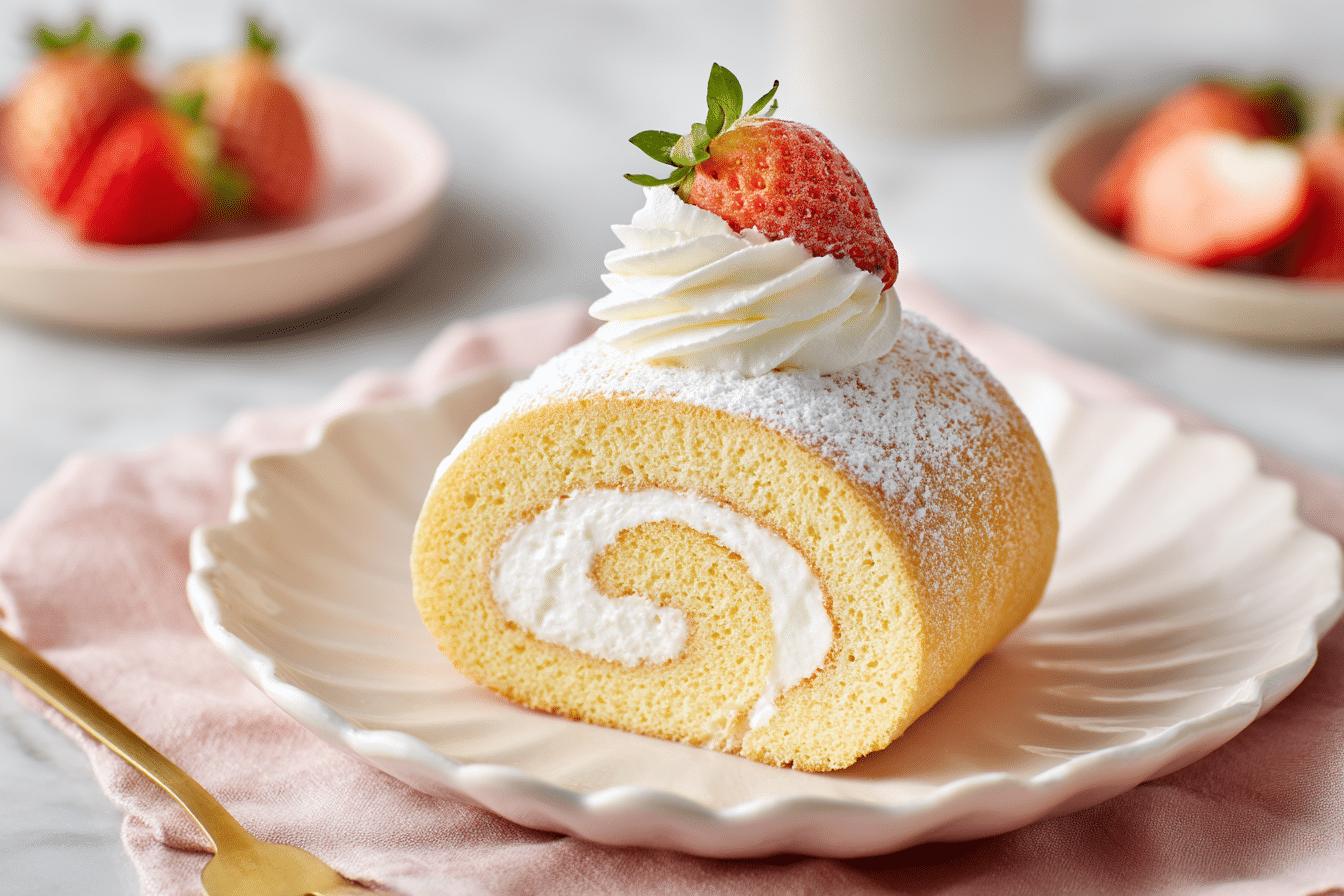
The Japanese Cake Roll is a soft, airy dessert known for its cloud-like texture, light sweetness, and stunning spiral of whipped cream inside a golden sponge. Unlike dense Western-style rolls, the Japanese version uses a chiffon-style base with whipped egg whites, creating a moist and pillowy cake that melts in your mouth.
This cake is beloved for its understated elegance—it’s not too sweet, not too rich, but perfectly balanced. The cream is silky and subtle, complementing the sponge rather than overpowering it. The rolled presentation makes it visually striking and easy to slice into beautiful, even portions.
Whether you’re serving it for afternoon tea, a birthday celebration, or as a light finish to a meal, the Japanese Cake Roll offers a refined and satisfying experience.
Ingredients Overview
Japanese cake rolls rely on technique and quality ingredients. Each one contributes to the cake’s signature lightness and flavor.
Eggs (Separated) – The heart of this recipe. Yolks add richness, while whites are whipped into a meringue to provide lift and structure. Fresh, room-temperature eggs whip more efficiently.
Granulated Sugar – Divided between the yolks and whites to sweeten both the sponge and stabilize the meringue.
Cake Flour – Low-protein flour keeps the sponge soft and tender. Sift it to prevent lumps.
Whole Milk – Adds moisture and helps the flour blend smoothly.
Vegetable Oil – Keeps the cake moist and pliable. Use neutral-flavored oil like canola or sunflower.
Vanilla Extract – Adds warm, subtle flavor to the sponge. Almond or matcha extract can also be used.
Cream of Tartar or Lemon Juice – Helps stabilize the egg whites during whipping. Optional, but useful.
Heavy Whipping Cream – Used for the filling. Should be cold and whipped to soft peaks.
Powdered Sugar – Sweetens the whipped cream and blends easily. Also used for dusting the towel during rolling.
Optional Fillings – Fresh berries, sweet red bean paste, or matcha powder for flavor variations.
Step-by-Step Instructions
-
Preheat and Prep
Preheat your oven to 340°F (170°C). Line a 10×15-inch jelly roll pan with parchment paper. Lightly grease if needed to ensure easy release. -
Make the Egg Yolk Batter
In a medium bowl, whisk together 4 large egg yolks and 2 tablespoons sugar until pale and thick. Add ¼ cup milk, ¼ cup vegetable oil, and 1 teaspoon vanilla extract. Mix until smooth.Sift in ½ cup cake flour and whisk until just combined. The batter should be smooth and slightly thick.
-
Whip the Egg Whites
In a clean bowl, beat 4 large egg whites with a pinch of salt and ¼ teaspoon cream of tartar (optional). Once foamy, gradually add ¼ cup sugar while beating.Continue whipping to medium-stiff peaks—shiny and smooth, but not dry.
-
Fold Gently
Add one-third of the meringue to the yolk batter and mix to lighten. Then gently fold in the rest in two parts, using a spatula with careful strokes to maintain airiness. -
Bake the Sponge
Pour the batter into the prepared pan. Use an offset spatula to level the surface. Tap the pan lightly on the counter to remove large air bubbles.Bake for 20–22 minutes, or until the top is lightly golden and the cake springs back when touched.
-
Cool and Roll
While the cake is baking, prepare a clean kitchen towel and dust with powdered sugar.When baked, immediately invert the cake onto the towel. Peel off the parchment and score a shallow cut along one short edge (to help rolling). Roll the cake up with the towel and let it cool completely.
-
Prepare the Whipped Cream
Beat 1 cup cold heavy cream with 2 tablespoons powdered sugar and ½ teaspoon vanilla extract until soft to medium peaks. Chill until ready to use. -
Assemble the Cake
Unroll the cooled cake gently. Spread whipped cream evenly across the surface, leaving a ½-inch border on the edge.Re-roll the cake without the towel, using gentle pressure. Wrap the roll in plastic wrap and chill for at least 1 hour to set.
-
Slice and Serve
Trim the ends for a clean look. Slice with a warm serrated knife for perfect rounds.
Tips, Variations & Substitutions
Tips for Success
-
Use cake flour for a tender, delicate sponge.
-
Whip egg whites to the correct stage—overbeaten whites will crack the cake.
-
Don’t skip scoring the cake edge before rolling; it prevents tearing.
-
Roll while warm to set the shape.
Flavor Variations
-
Matcha: Add 1–2 tsp sifted matcha powder to the yolk batter.
-
Chocolate: Replace 2 tbsp flour with cocoa powder.
-
Strawberry Cream: Add diced strawberries to the whipped cream for fruit layers.
-
Red Bean: Spread sweet red bean paste under the cream for a traditional twist.
Substitutions
-
Dairy-Free: Use plant-based milk and coconut whipped cream.
-
Gluten-Free: Use a gluten-free flour blend suitable for cakes.
Serving Ideas & Occasions
The Japanese Cake Roll is ideal for elegant afternoon teas, light birthday celebrations, or paired with green tea after dinner. It’s refined and simple, making it suitable for both casual and formal occasions.
Serve chilled, dusted with powdered sugar or decorated with a few berries on top. For matcha or chocolate variations, a drizzle of white chocolate adds contrast.
Slices can also be packed individually for picnic desserts or lunchbox treats. Its smooth texture and clean presentation make it a hit at baby showers, brunches, or potlucks.
Nutritional & Health Notes
This cake is naturally lighter than Western-style cakes. It contains less butter, less sugar, and no frosting. The whipped cream filling is airy and not overly sweet, which makes each slice feel satisfying without being heavy.
You can reduce sugar slightly in the batter or cream without affecting structure. For a healthier take, use fresh fruit or naturally sweetened cream.
Each slice typically falls under 200–220 calories depending on filling, making it a reasonable indulgence. Because it’s served in slim slices, it fits well into a balanced dessert rotation.
FAQs
1. Can I make the Japanese Cake Roll ahead of time?
Yes, it’s even better when chilled. Make up to a day ahead and keep wrapped in plastic in the refrigerator. Slice just before serving.
2. My cake cracked while rolling—what happened?
Common reasons include overbaking, under-whipping egg whites, or rolling after the cake has cooled too much. Be sure to roll it while still warm and pliable.
3. How do I prevent the whipped cream from deflating?
Use cold cream, chill your mixing bowl, and whip to soft peaks. Overwhipping causes graininess. Stabilize with a bit of mascarpone or cream cheese if needed.
4. Can I freeze the cake roll?
Yes. Wrap tightly and freeze without powdered sugar topping. Thaw in the fridge overnight before serving. Note that the texture of the cream may change slightly.
5. What’s the best knife for clean slices?
Use a sharp serrated knife dipped in warm water. Wipe between cuts for smooth, bakery-style presentation.
6. Can I make this cake without a towel?
Yes, you can use parchment paper or a silicone baking mat, but a towel helps wick moisture and gives the cake flexibility during rolling.
7. Is this the same as a Swiss Roll?
Similar in shape, but Japanese rolls use a lighter chiffon-style sponge, less sugar, and airy cream fillings—making them fluffier and more delicate than dense Swiss rolls.
Japanese Cake Roll Recipe with Perfect Swirls
A soft, fluffy Japanese Cake Roll made with a light chiffon sponge and airy whipped cream filling—elegant, balanced, and perfect for any occasion.
- Prep Time: 25 minutes
- Cook Time: 22 minutes
- Total Time: 1 hour 30 minutes (includes chilling)
- Yield: 8–10 slices
Ingredients
Cake:
4 large eggs, separated
6 tbsp granulated sugar (divided)
½ cup cake flour, sifted
¼ cup whole milk
¼ cup vegetable oil
1 tsp vanilla extract
¼ tsp cream of tartar or lemon juice (optional)
Pinch of salt
Powdered sugar (for dusting)
Filling:
1 cup heavy cream
2 tbsp powdered sugar
½ tsp vanilla extract
Instructions
-
Preheat oven to 340°F. Line a 10×15-inch jelly roll pan with parchment.
-
Whisk yolks with 2 tbsp sugar until pale. Add milk, oil, vanilla. Mix in sifted cake flour.
-
In another bowl, beat egg whites with cream of tartar and remaining ¼ cup sugar to medium-stiff peaks.
-
Fold meringue into yolk batter in batches.
-
Spread into pan, smooth surface. Bake 20–22 minutes.
-
Invert onto powdered sugar–dusted towel. Peel parchment. Score edge, roll while warm. Cool.
-
Whip cream with sugar and vanilla to soft peaks.
-
Unroll cake, spread cream evenly. Reroll gently. Wrap and chill 1 hour.
-
Slice with a warm serrated knife.
Notes
Roll the cake while still warm for best results. Keep chilled until serving.